Building a Commercial Dishwasher Maintenance Schedule for Miami Kitchens
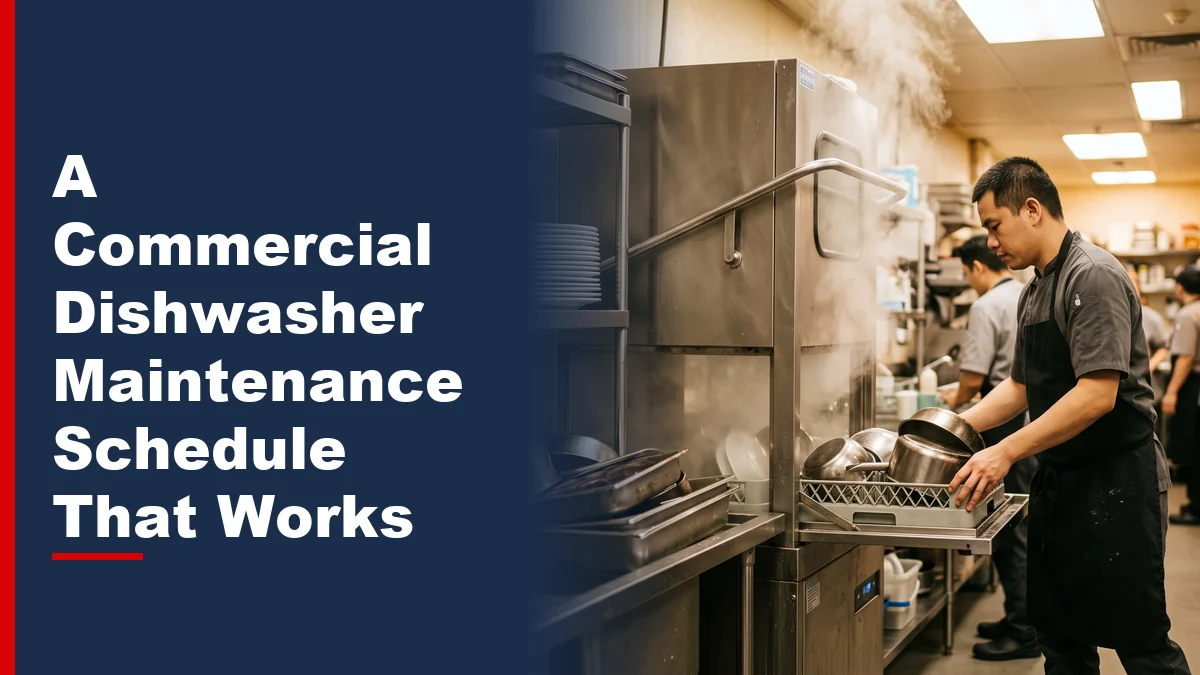
Saturday night, second seating, and the dish pit crew waves over the manager because the machine died mid-cycle. That is usually the moment a structured preventive plan stops sounding optional and starts sounding like the difference between a full dining room and hand-washing every plate. When a Miami kitchen experiences repeated equipment breakdowns, the issue is rarely caused by the last cycle alone, but by every cycle that went unserviced in between.
Most commercial kitchens do not skip servicing out of carelessness; they simply lack a clear routine. Having a proper commercial dishwasher maintenance schedule ensures every shift knows exactly which tasks to complete, from five-minute closing routines to scheduled professional inspections.
Building a Commercial Dishwasher Maintenance Schedule That Works
Commercial dishwashers earn their keep through high-volume repetition. Running dozens of cycles nightly causes gradual wear: spray nozzles clog with grease, door gaskets lose their seals, and rinse aid lines restrict flow. While one minor issue might not halt operations immediately, multiple neglected components eventually cause sudden equipment failure during peak dinner rushes.
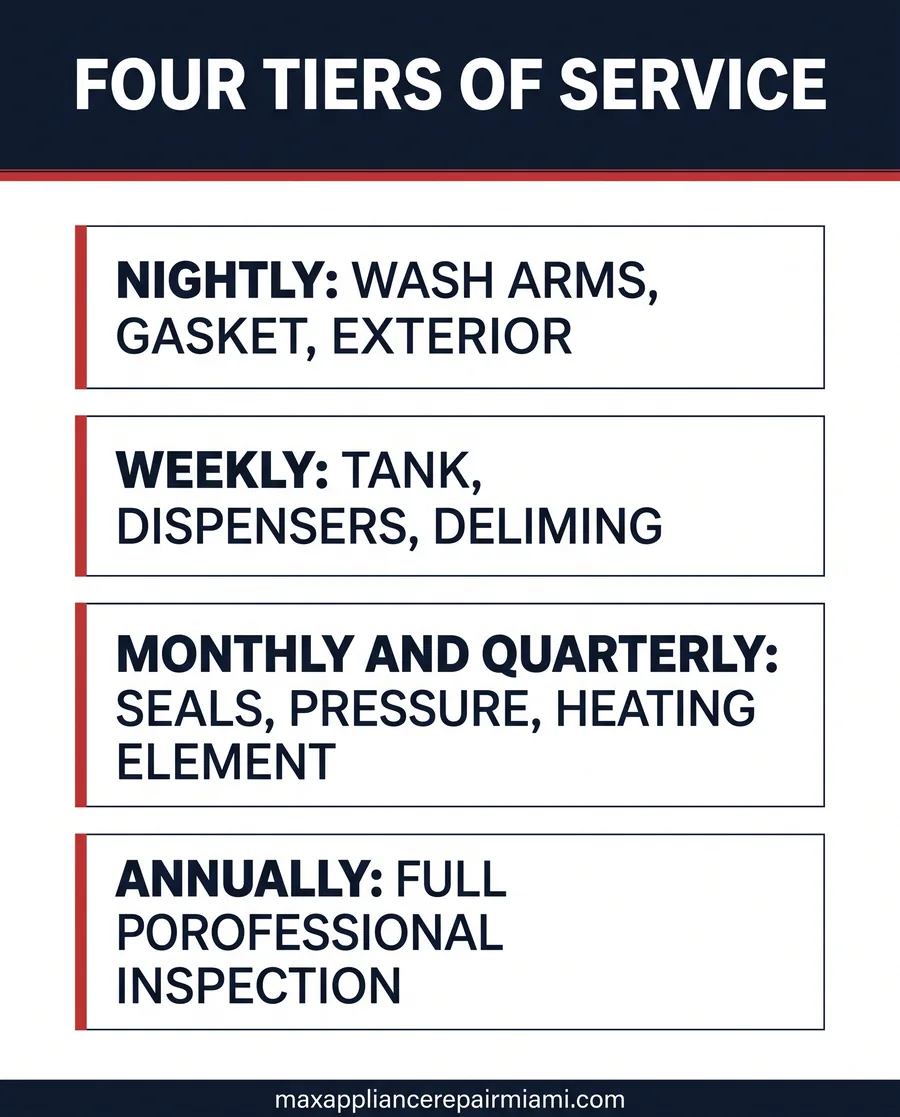
An effective commercial dishwasher maintenance schedule for Miami kitchens splits into four distinct tiers: nightly closing shift routines, weekly manager checks, monthly or quarterly deep inspections, and annual professional servicing. Because temperature and sanitizer requirements vary by machine type, always use your manufacturer’s service manual as the foundation for your routine.
Daily Tasks Every Closing Shift Should Run
Performing these five-minute daily habits prevents debris from degrading internal components between deep cleanings:
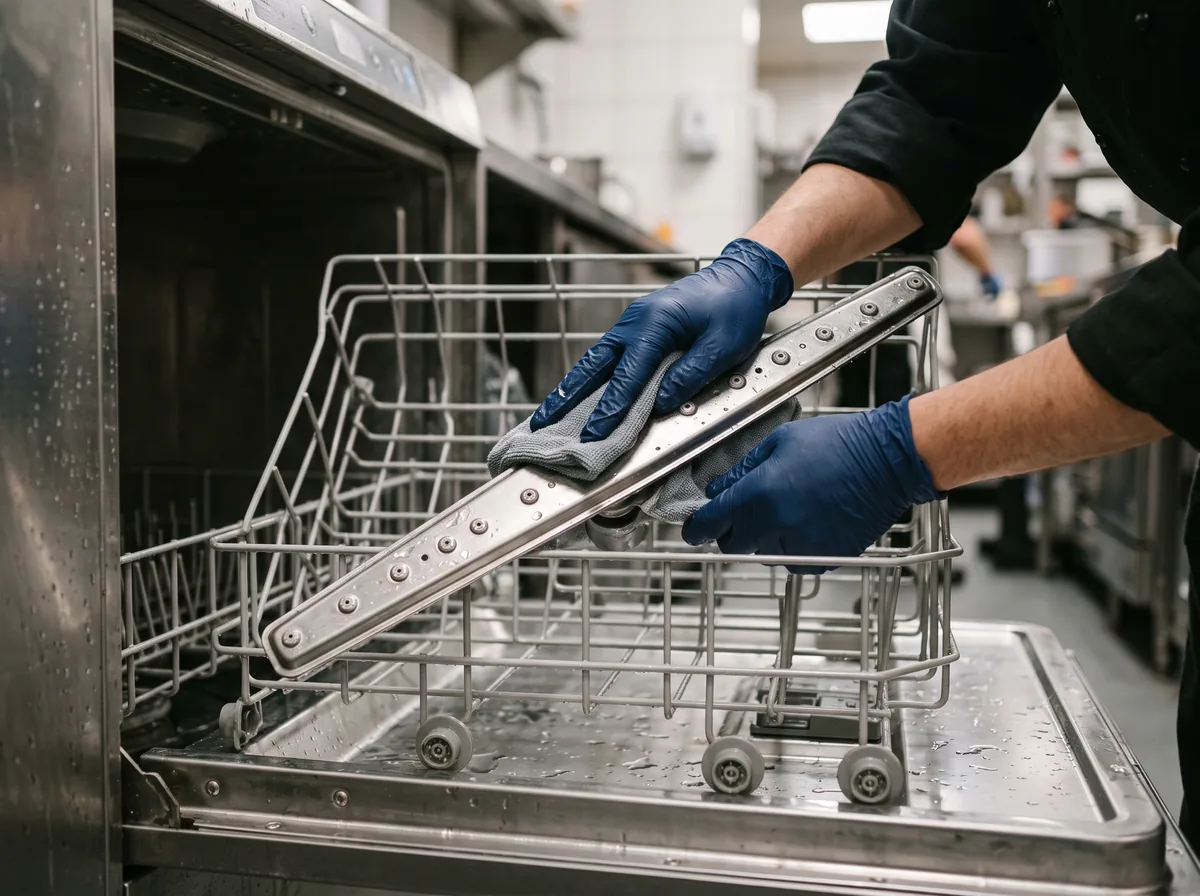
- Wipe down wash and rinse arms, clearing any visible nozzle blockages.
- Empty, rinse, and reseat the scrap tray or pre-rinse filter basket.
- Inspect the door gasket for trapped food debris or water leaks.
- Wipe exterior control panels to prevent grease accumulation around seals.
- Verify detergent and rinse aid levels in dispensing systems.
Did You Know?
South Florida water contains high mineral concentrations that build up rapidly on heating elements and spray nozzles. Wiping down spray arms nightly removes mineral film before it hardens into stubborn scale. Reviewing how hard water impacts commercial appliances provides deeper insights into managing scale accumulation.
Weekly Tasks That Keep the Wash Cycle Sanitizing
Weekly maintenance targets areas beyond basic daily wipes. Remove wash arm caps to flush out trapped internal debris, as restricted spray arms compromise water pressure and wash coverage. Inspect interior tank walls, confirm dispensing pumps release correct chemical ratios, and delime the machine according to local water hardness levels.
Weekly reviews also help identify float valve or fill line issues early, such as unusually long fill cycles or low water levels. Resolving these minor discrepancies during weekly checks prevents emergency downtime and expensive component replacements later.
| Frequency | Responsible Party | Task Summary |
|---|---|---|
| Nightly | Closing Shift | Clean wash arms, scrap tray, door gaskets, and exterior panels |
| Weekly | Shift Lead / Kitchen Manager | Flush arm caps, clean tank interior, verify dispensers, and delime |
| Monthly | Kitchen Manager | Inspect door seals, hinges, float valves, and drain flow rate |
| Quarterly | Kitchen Manager / Technician | Check pressure levels, heating elements, and thermostat accuracy |
| Annually | Licensed Service Technician | Full system teardown, electrical calibration, and part replacement |
Pro Tip
Maintain a physical maintenance log near the dishwasher. Documenting weekly and monthly service dates provides technicians with immediate operational history during scheduled service visits, streamlining diagnostics and reducing call times.
Monthly and Quarterly Service Points
Monthly Inspections
Examine components that lie outside daily operational checks. Inspect door seals and hinges for cracking or deformation, as worn gaskets cause floor leaks around the unit base. Test float valves for proper shutoff and confirm drain lines clear wastewater efficiently without back-up.
Quarterly Inspections
Quarterly maintenance involves technical evaluations: assessing wash and rinse pressure, testing heating element integrity, and verifying thermostat accuracy against manufacturer specifications. Experienced service technicians utilize specialized pressure and temperature gauges to evaluate internal performance accurately.
The Annual Professional Service Visit
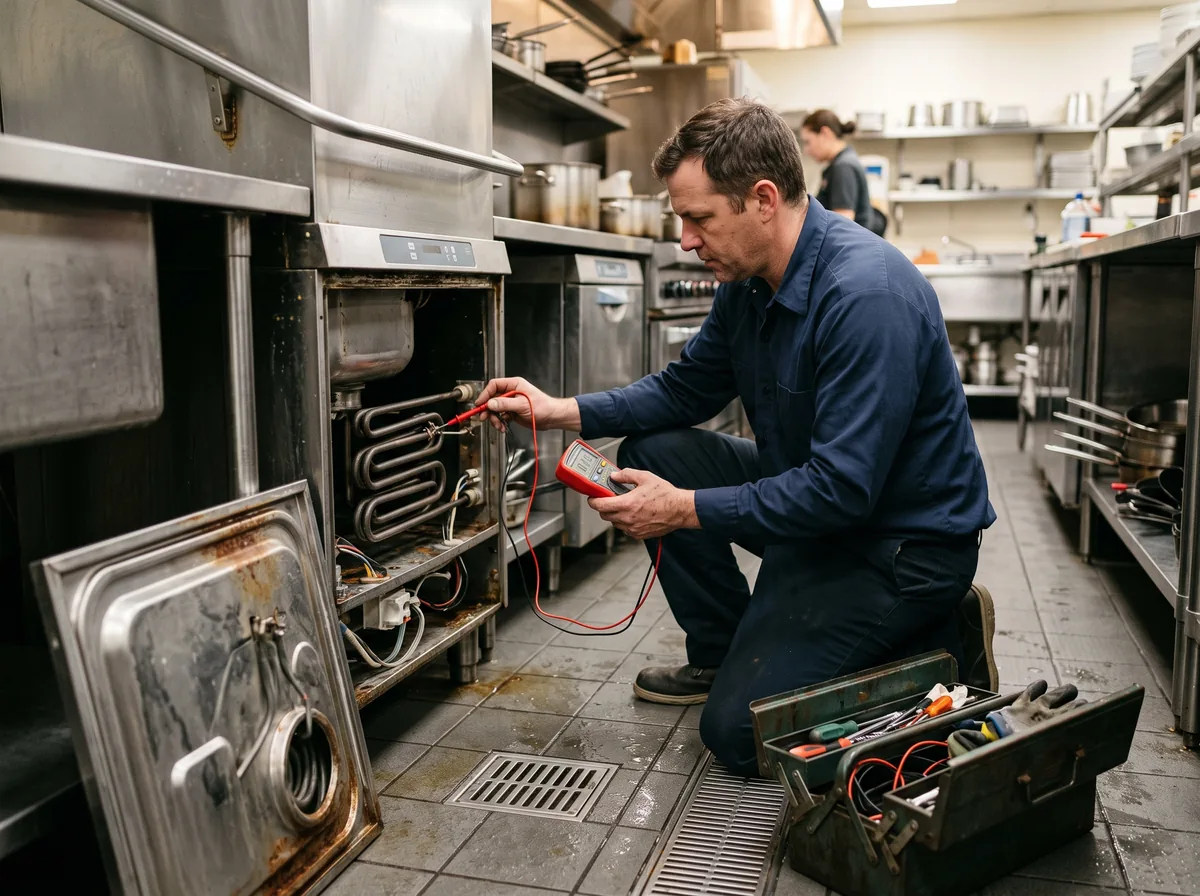
An annual professional inspection validates your complete commercial dishwasher maintenance schedule. A certified technician tears down manifolds, descales heating elements, inspects control wiring for heat degradation, and verifies that sanitizing cycles meet health code compliance.
Detailed maintenance logs streamline health inspections, as local inspectors frequently request deliming and sanitization records. For guidance on local food safety compliance, review the Florida Department of Health environmental health program standards. If scheduling service for the first time, understanding what questions to ask before hiring a technician ensures you select a qualified commercial provider.
Good to Know
This article provides general maintenance recommendations for Miami commercial kitchens. It does not replace equipment manufacturer manuals or local health authority mandates. Sanitizing requirements and inspection protocols vary by machine model and jurisdiction. Always verify requirements with local health officials and a certified service technician.
Signs Your Maintenance Schedule Slipped
Even structured commercial maintenance routines experience delays during busy periods. Watch for these primary indicators of maintenance neglect:
- Glassware displays cloudy film or spots despite proper chemical dosing.
- Water accumulates on the floor surrounding the unit during operation.
- Burning or uncharacteristic odors emerge during wash cycles.
- Cycle execution times extend noticeably longer than normal.
- Frequent error codes or fault indicator lights appear on control panels.
Our technicians handle emergency service calls across Miami, and machines requiring urgent repairs almost always lack a documented service log on site.
Download the Free Quick Guide
A printable reference checklist covering daily, weekly, and monthly dishwasher maintenance tasks.
Frequently Asked Questions
How often should a commercial dishwasher receive professional service?
Most commercial kitchens schedule full professional inspections annually, paired with quarterly checks on heating elements and spray pressure. High-volume kitchens operating multiple shifts daily may require bi-annual professional inspections based on workload.
How can busy kitchens maintain a dishwasher schedule without losing time?
By dividing responsibilities logically. Nightly tasks require only five minutes during closing. Weekly and monthly inspections should be assigned to slow prep periods, such as pre-opening shifts, ensuring routine maintenance does not disrupt dinner service.
What happens if a dishwasher fails its sanitizing cycle?
Failing to reach required sanitization temperatures or chemical levels creates severe food safety risks and health code violations. Regular temperature verification and professional calibration keep sanitizing cycles fully compliant.
Is repairing an older commercial dishwasher better than replacing it?
It depends on overall component condition and service history. Well-maintained units with recorded maintenance histories often justify component repairs, whereas severely neglected units may warrant replacement if major systems fail.
If your commercial dishwasher exhibits extended run times or ineffective cleaning, follow these immediate steps:
- Review your equipment manual to verify descaling intervals and temperature settings.
- Establish a physical maintenance log near the unit to track daily and weekly compliance.
- Schedule a professional inspection before minor issues escalate into costly downtime.
Max Appliance Repair Miami services commercial dishwashing systems across South Florida. If your kitchen requires professional service, schedule a commercial dishwasher maintenance visit with our technicians today.