
How Hard Water in Hollywood, Florida, Affects Your Appliances
If your dishwasher leaves a chalky film and your water heater is louder every year, hard water appliance damage is the likely culprit, and in Hollywood it is more common than most homeowners realize. The city draws much of its supply from the Biscayne Aquifer, a limestone source carrying a heavy load of dissolved calcium and magnesium. Those minerals settle inside your machines, one layer at a time, causing parts to fail years prematurely. Learning how hard water affects your appliances in Hollywood, Florida helps you spot scale-related wear before it leads to a total system failure.
The main challenge is that mineral-heavy municipal water looks perfectly clear. Invisible hard water appliance damage builds up until a heating element burns out or a water valve jams open. Understanding what scale does inside each appliance helps you spot early warning signs and slow down mineral buildup in South Florida homes.
In this article
- What hard water is and why Hollywood has so much
- How to spot hard water appliance damage early
- What scale does to each appliance and how fast
- Do you need a water softener in South Florida?
- How to protect your appliances without a softener
- When mineral buildup becomes a repair, not a chore
- Frequently asked questions
What hard water is and why Hollywood has so much
Water hardness measures dissolved calcium and magnesium levels in grains per gallon. Anything above 7 grains is considered hard. Much of South Florida sits well past that threshold because groundwater filters through porous limestone. For a complete breakdown on how hardness levels are classified, consult the U.S. Geological Survey hardness of water guide.
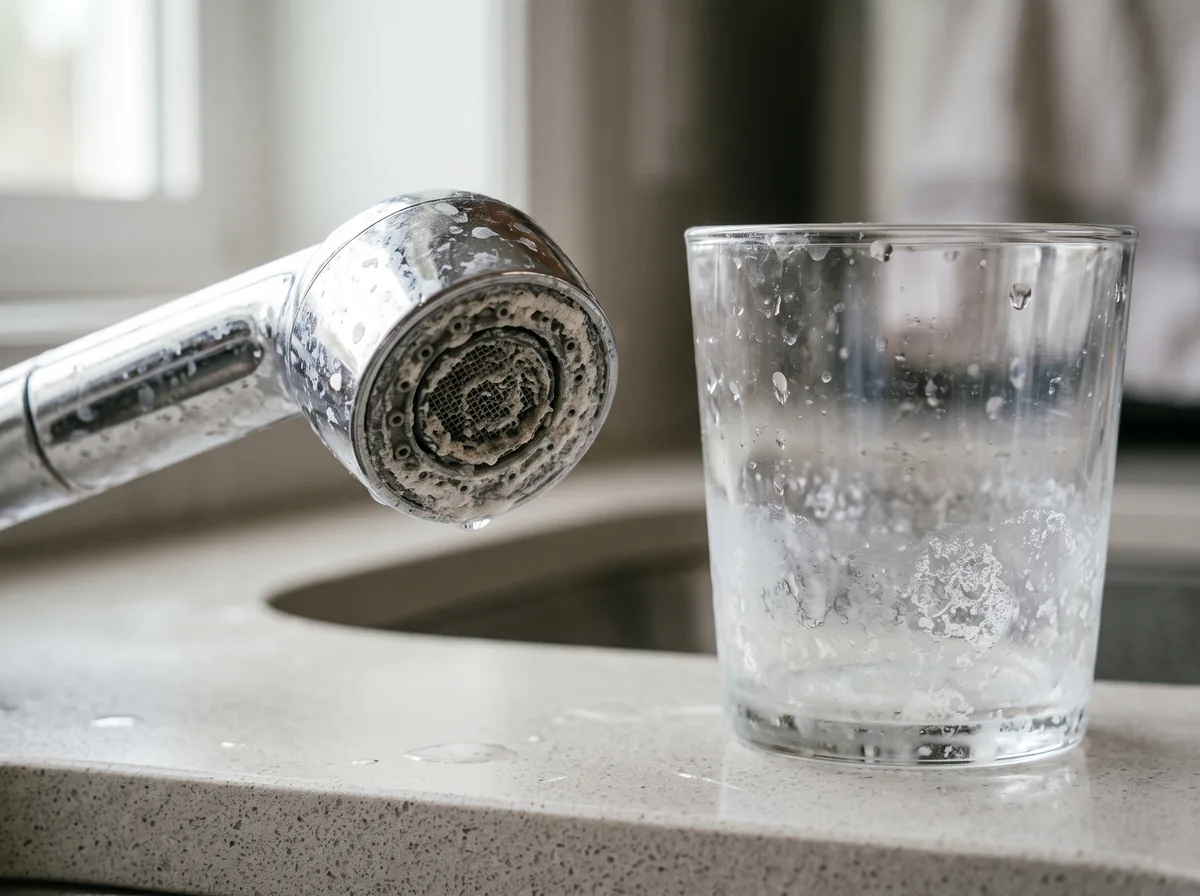
When hard water heats or evaporates, minerals bond to internal components as scale deposits. While you may see white crust on faucet spouts, unseen layers accumulate inside dishwasher spray arms, washing machine valves, and water heater tanks.
Did you know?
Mineral scale acts as a thermal insulator. A layer just 1/16th of an inch thick on a heating element cuts efficiency by approximately 12 percent, forcing water heaters and dishwashers to run longer to maintain target water temperatures.
How to spot hard water appliance damage early
Recognizing hard water appliance damage can be difficult because individual symptoms mimic general wear. However, simultaneous issues across multiple water-using machines indicate mineral buildup.
Key warning signs across your household include:
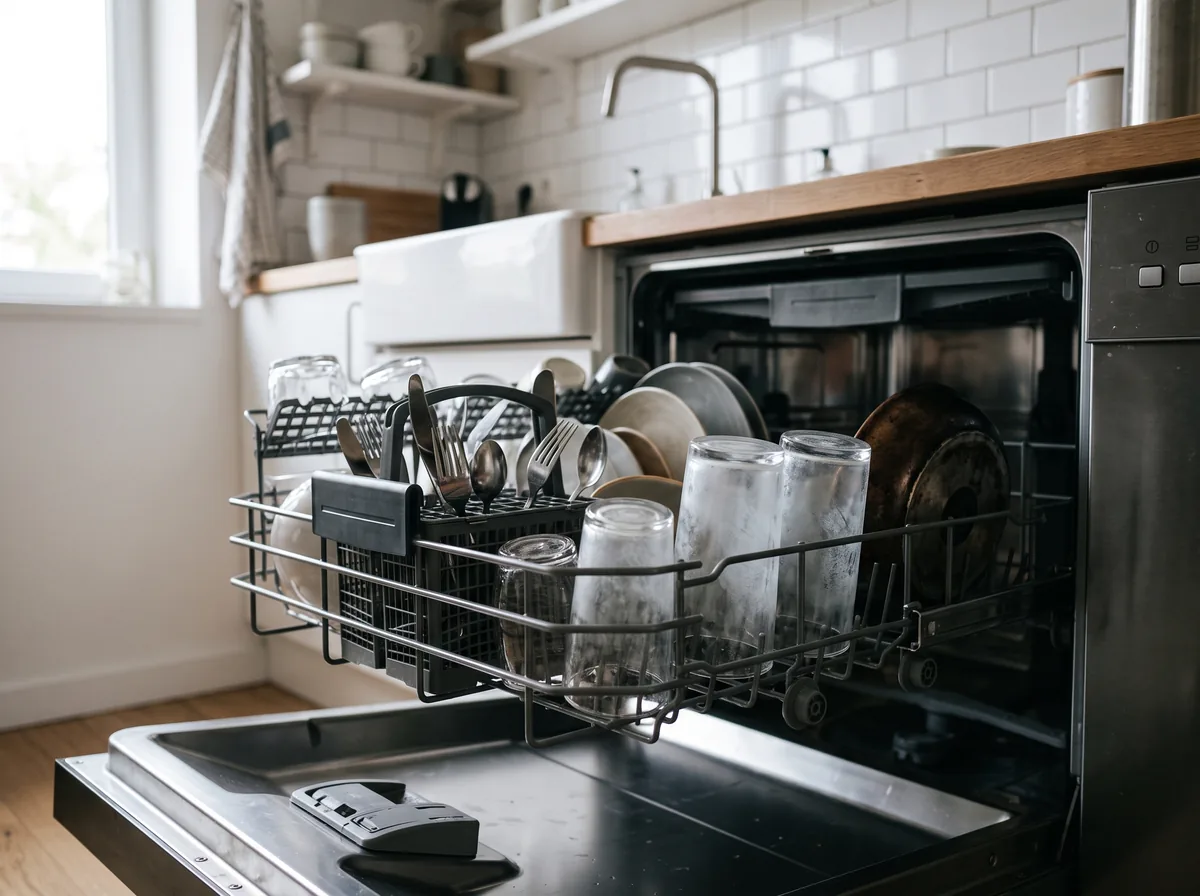
- A white or cloudy film on glassware that persists after washing.
- Dishwashers and washing machines running noticeably longer cycles.
- Reduced water pressure from dishwasher spray arms or washing machine inlet valves.
- Rumbling or popping sounds coming from the water heater during heating cycles.
- Ice maker lines and valves clogging or leaking due to scale obstruction.
- Laundry emerging stiff, dull, or gray despite using sufficient detergent.
Is it mineral scale or a mechanical breakdown?
If multiple appliances show symptoms at the same time, hard water is usually responsible. Cloudy dishes, stiff laundry, and water heater noise occurring simultaneously point to water quality issues across your household supply lines.
What scale does to each appliance and how fast
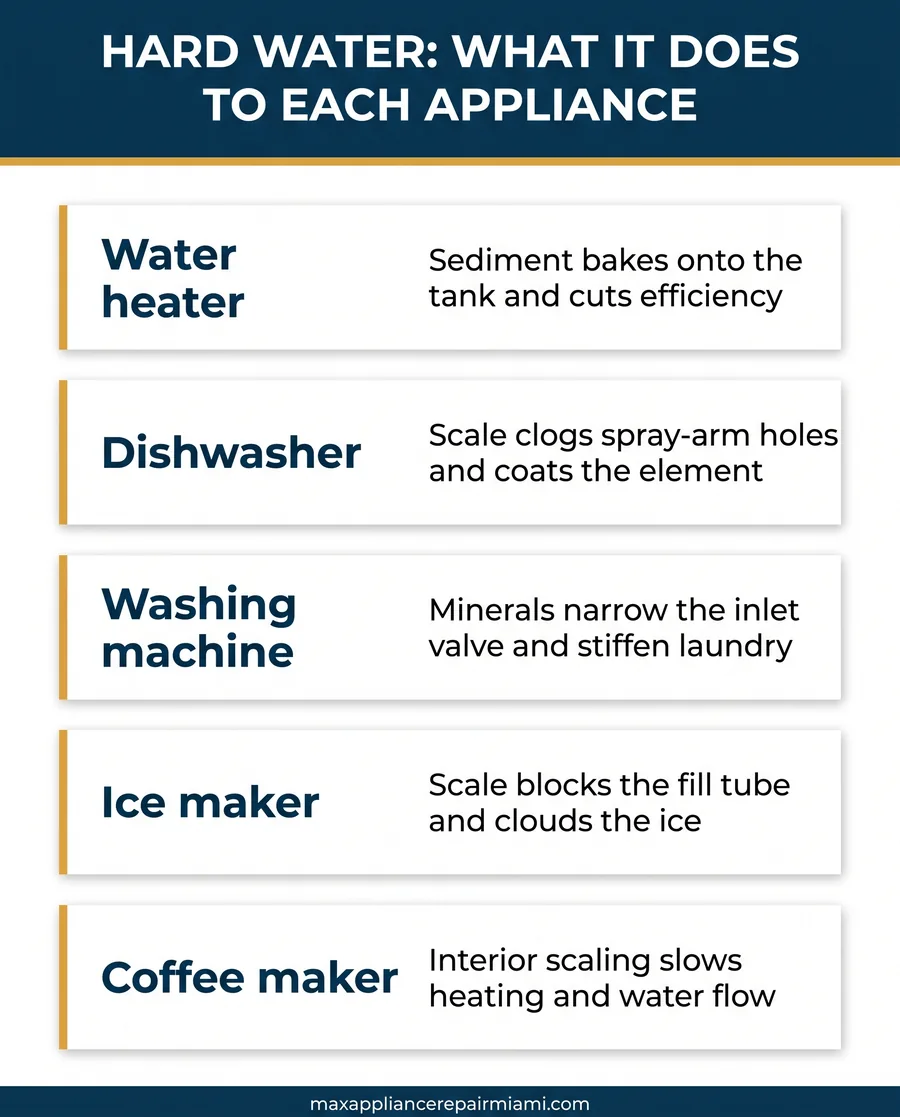
Appliances that heat water or rely on small valves experience the fastest degradation because elevated temperatures accelerate mineral precipitation. Below is a breakdown of how scale impacts appliances operating on Hollywood water supply lines:
| Appliance | What Scale Does | Part That Fails First | Timeline on Hard Water |
|---|---|---|---|
| Water heater | Sediment bakes onto tank bottom, insulating heating element | Heating element and tank lining | Efficiency drops within 2 to 3 years |
| Dishwasher | Clogs spray-arm nozzles and coats heating element | Spray arms and water inlet valve | Film and longer cycles within 1 to 2 years |
| Washing machine | Mineral scale restricts water inlet valves and hoses | Inlet valve filters and pump seals | Slow fills and stiff laundry within 2 to 4 years |
| Ice maker & fridge line | Scale blocks small fill tubes and solenoid valves | Water inlet valve | Cloudy or hollow ice within 1 to 2 years |
| Coffee maker & kettle | Internal scaling restricts water flow and heating velocity | Heating element / thermal tube | Visible buildup within months |
Do you need a water softener in South Florida?
Whole-home water softeners remove calcium and magnesium through ion exchange, delivering treated water to every appliance. If water testing shows high hardness levels, softeners can extend unit lifespans and reduce energy overhead. Alternative solutions include point-of-use inline filters for refrigerators or scale-inhibiting cartridges for water heaters.
How to protect your appliances without a softener
Routine maintenance significantly slows mineral scaling inside household equipment:
- Run a citric-acid descaling agent through your dishwasher monthly to remove mineral film from spray arms.
- Inspect spray arm ports and remove scale blockages using a small pin or toothpick.
- Flush sediment from your water heater drain valve every few months to clean the tank base.
- Use quality rinse aid to prevent mineral spot formation on glassware during drying cycles.
- Descale coffee makers and electric kettles every one to two months based on usage.
- Replace refrigerator water filter cartridges on schedule to protect water inlet valves.
Did you know?
Setting water heater thermostats to 120°F reduces scale formation rate. Because higher heat increases mineral precipitation, moderate temperatures lower sediment accumulation on heating elements.
When mineral buildup becomes a repair, not a chore
While preventive maintenance controls scale, cleaning cannot restore burned-out heating elements, scored valve seats, or seized pumps. Once internal parts fail from severe mineral buildup, professional component replacement becomes necessary to restore normal operation.
Qualified technicians evaluate element continuity, replace scaled inlet valves, and assess overall unit condition.
Download the free quick guide
Access our single-page maintenance checklist to identify early signs of mineral scale and extend appliance service life in South Florida.
Frequently Asked Questions
Preventing hard water appliance damage helps extend the operating lifespan of your kitchen and laundry units. Max Appliance Repair Miami provides diagnostic and repair services across Hollywood, Pembroke Pines, Hallandale Beach, and surrounding Broward County areas. If your dishwasher, washing machine, or refrigerator requires service, book a repair visit today.