
How to Prepare Your Miami Home Appliances for a Long Vacation
Leaving town for an extended trip requires a different approach in South Florida. The smart move is to prepare appliances for vacation before locking the door, rather than dealing with an emergency call later. Heat, extreme humidity, and storm-season power surges can quickly lead to spoiled food, moldy washers, or undetected leaks. A little preparation, along with keeping the contact information for reliable refrigerator repair in Miami handy, ensures a relaxing trip and a hassle-free return.
Here is a room-by-room guide tailored for South Florida homeowners: how to manage the refrigerator, shut off water lines to prevent flooding, control indoor humidity, and safeguard equipment during hurricane season.
Start with the refrigerator: your biggest risk
The refrigerator is the one appliance that cannot simply be switched off and ignored. Start by consuming or discarding perishable items that will not last through your trip. Produce, dairy, and leftovers left unattended can cause severe odors and spoil quickly.
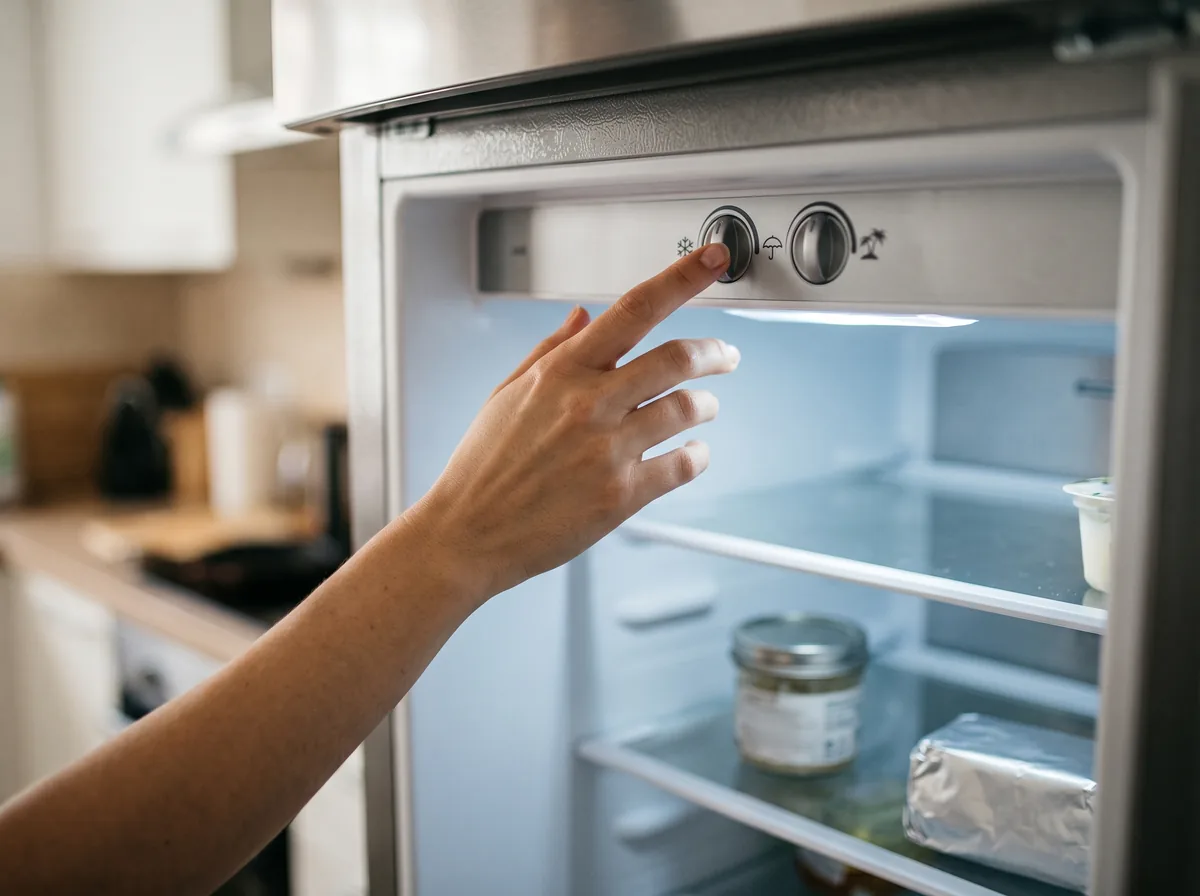
For most vacations, leave the refrigerator running. Modern units are energy-efficient, whereas an unpowered fridge in Miami humidity can develop mold within days. If your model features a vacation mode, turn it on. Set the fresh food compartment to 37°F and the freezer to 0°F. Keep the freezer as full as reasonably possible so it retains cold longer during a power outage, and turn off the ice maker so ice does not melt into a solid block.
Quick take
For trips under a month, leave the fridge running, clear out perishables, and turn off the ice maker. Only empty and unplug a refrigerator for extended absences over a month; if unplugged, prop the doors open to prevent mold growth in the humidity.
Shut off the water to stop a silent flood
Water damage is the most expensive disaster that can occur while away. A ruptured washing machine hose or leaking ice maker line can flood a residence for days before being discovered, creating severe structural damage and mold growth inside a closed home.
Before leaving, turn off the water supply to key appliances:
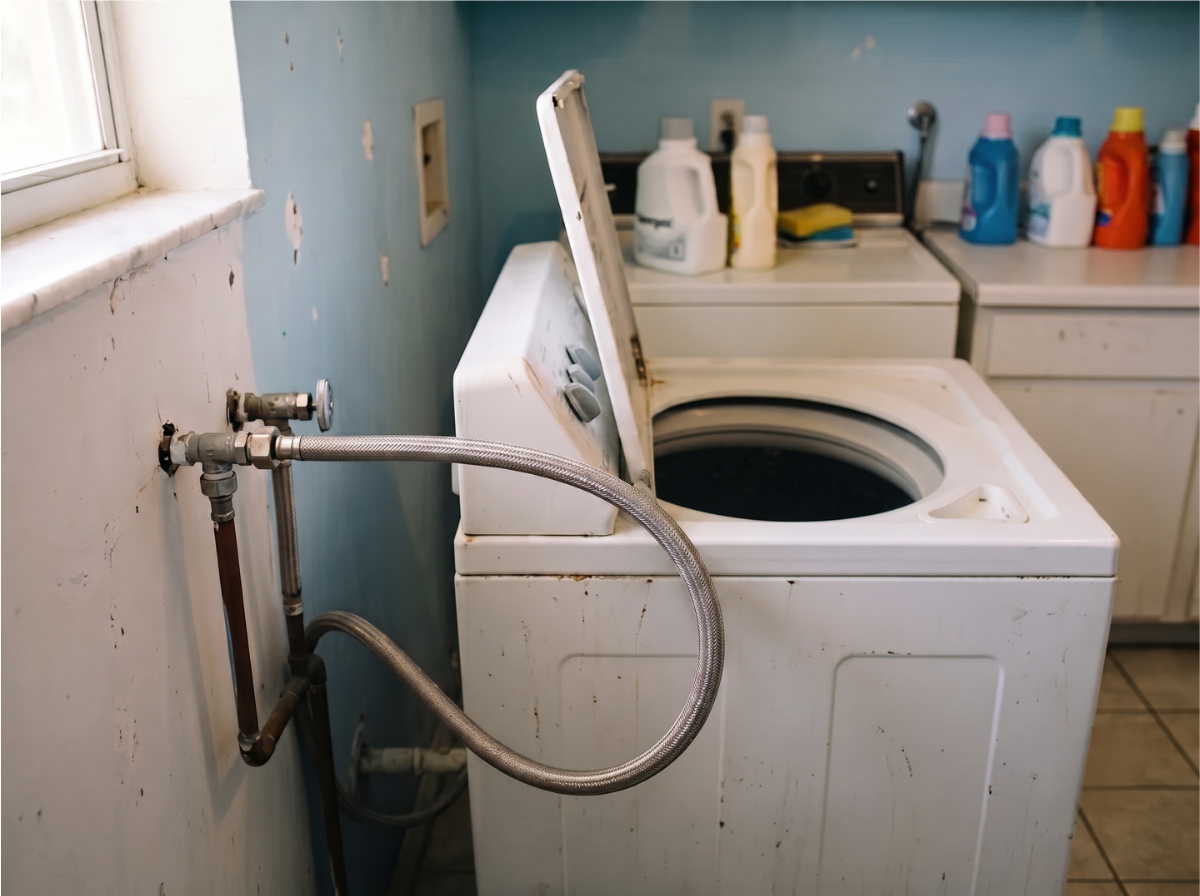
- Close the hot and cold water valves behind the washing machine. Rubber supply lines under continuous pressure are a primary cause of residential flooding.
- Turn off the dedicated shutoff valve for the refrigerator’s ice maker and water dispenser.
- Shut off the supply valve connected to the dishwasher.
- For extended absences, consider shutting off the main water valve to the home completely.
Pro tip
Braided stainless steel supply hoses are significantly more durable than standard rubber hoses. If your rubber hoses are over five years old, replacing them before traveling is effective protection against severe leaks.
Miami heat and humidity: why an empty home is different
When a home is occupied, daily activity and regular air conditioning keep air moving and humidity under control. When sealed for weeks during warm weather, interior humidity rises, creating ideal conditions for mold inside dormant appliances. Front-load washing machines are particularly vulnerable.
Before leaving, run a hot cleaning cycle on the washer, then leave the door and detergent drawer propped open to dry out the drum and rubber seal. Follow the same procedure for the dishwasher: run a cleaning cycle and crack the door open. Never shut off the central air conditioner completely. According to the EPA mold and humidity guidance, you should use a thermostat or dehumidifier that monitors relative humidity and keep indoor humidity below 60%. Temperature alone does not confirm humidity control.
Did you know
A closed front-load washer with residual moisture can develop mildew in less than a week in high humidity. Leaving the door open to allow air circulation is the most effective way to prevent foul odors.
How long you will be gone changes how you prepare appliances for vacation
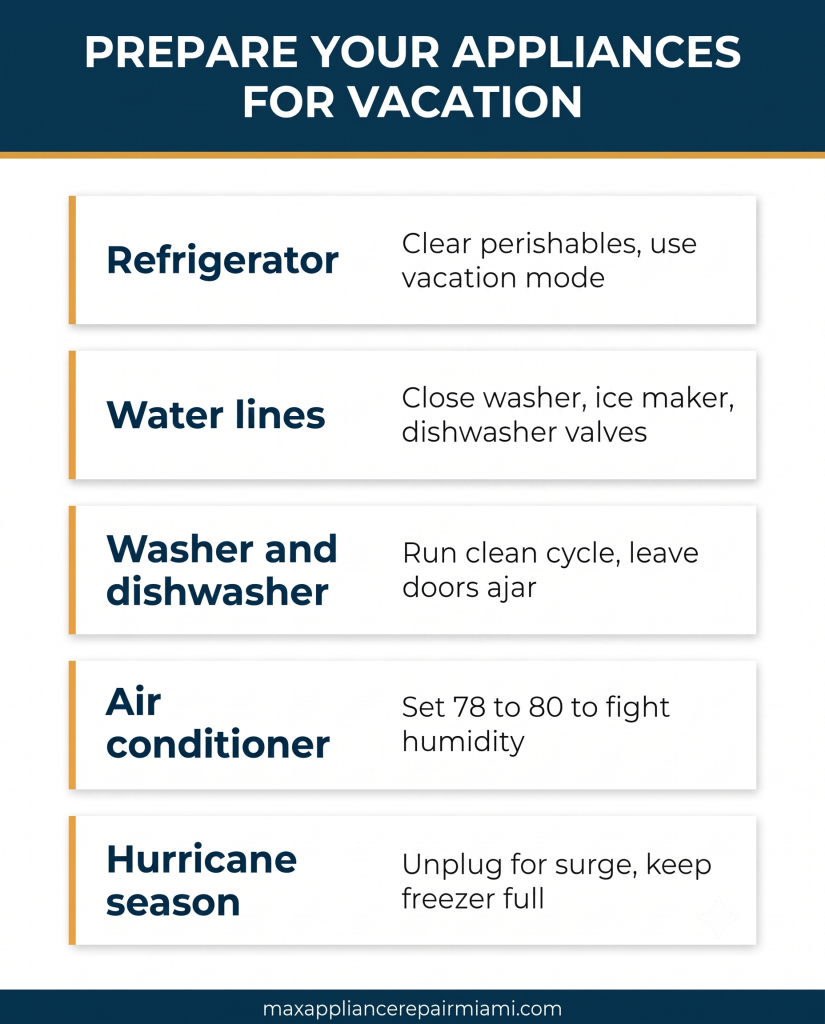
A short weekend trip requires a different routine than an extended multi-week absence. Adjust your steps based on travel duration:
| Appliance step | Weekend to 1 week | 1 to 4 weeks | Over a month |
|---|---|---|---|
| Refrigerator | Leave on, clear fresh perishables | Leave on, use vacation mode | Empty and unplug, prop doors open, or keep on with a check-in |
| Ice maker | Optional | Turn off | Turn off and empty the bin |
| Washer and dishwasher | Leave doors ajar | Run clean cycle, leave ajar, close valves | Same, plus close main water valve |
| Air conditioner | Monitor <60% humidity | Monitor <60% humidity | Monitor <60% humidity, use smart controls |
| Surge protection | Recommended | Recommended | Unplug small appliances and electronics |
Save your money
Installing smart thermostats and water leak sensors behind major appliances can prevent extensive water damage or food loss. For frequent travelers, these devices offer peace of mind and protection against unexpected repairs.
Hurricane season adds another layer
If your trip coincides with hurricane season (June through November), storms can interrupt power and send high-voltage surges through electrical lines. Protect your electrical systems and food supply with these precautions. Refer to the official Ready.gov hurricane guide for complete emergency planning and review FDA power-outage food safety guidance.
- Unplug sensitive electronics and small countertop appliances to protect them from electrical surges, or install whole-home surge protection.
- Keep the freezer full and closed. A fully packed freezer maintains safe temperatures for approximately 48 hours without power, compared to 24 hours for a half-full unit.
- Keep an appliance thermometer inside your refrigerator and freezer. Per the FDA, food may be safely refrozen only if it still contains ice crystals or is maintained at or below 40°F.
- Remember that refrigerated perishables are generally unsafe after four hours without power, requiring proper disposal following prolonged outages.
Do not use after a flood
If an appliance or electrical outlet was exposed to floodwater, do not attempt to turn it on or plug it in. Water inside electrical components presents severe shock and fire hazards. Have a qualified technician inspect the equipment before restoring power.
Download the free quick guide
A one-page room-by-room checklist to ready your Miami home appliances before a long trip.
Frequently Asked Questions
Properly taking time to prepare appliances for vacation ensures you return to a dry, clean, and fully operational home. If you return to a malfunctioning washer, a warm refrigerator, or equipment damaged during a storm, our service technicians assist homes in Miami Beach, Coral Gables, Aventura, and surrounding areas. Schedule a visit with Max Appliance Repair Miami to restore your home appliances promptly.