

How to Prevent Mold in Front-Load Washers During Miami Summers
That musty, sour smell that hits when you open the washer door is mold, and in a Miami summer it grows fast. To help prevent mold in front-load washer drums and door seals, focus on three primary habits: leave the door open between loads, wipe the rubber gasket dry, and run a regular cleaning cycle. Ignore them for a few humid weeks and you end up scrubbing black gunk out of the seal or booking front-load washer repair for a machine that reeks.
Front-load washers are efficient, but their design traps moisture where you cannot see it. Here is why South Florida makes it worse, and the routine that helps keep your washer, and your clothes, smelling clean.
Why front-load washers grow mold
Front-load washers seal tightly so they do not leak while the drum spins on its side. That same airtight door is the main factor. When the cycle ends, water can pool in the folds of the rubber gasket, in the detergent drawer, and in the sump at the bottom of the drum. Close the door on that leftover moisture in a warm room, and you have built a perfect environment for mold and mildew.
Two other habits feed it. Too much detergent leaves a soapy residue, and washing everything in cold water leaves organic buildup behind. Add Miami’s air and mold growth accelerates.
Did you know
Mold does not need much to thrive: moisture, warmth, and organic residue like detergent buildup or lint. A sealed front-load washer sitting closed after a cold wash hands it all three. That is why the same machine that stays fresh in a dry climate can turn musty in a humid one within days.
What Miami summers do to the problem
In a dry climate, a closed washer dries out more easily between loads. In Miami, it does not. Summer humidity regularly sits above 70 percent, and a laundry room or closet with poor airflow holds that moisture. The water trapped in the gasket after a wash has nowhere to evaporate, so it sits warm and damp for hours.
This environment makes it necessary to maintain a daily maintenance routine. That is the difference between a washer that needs a wipe once a month and one that grows a black ring in the seal every week. If your machine lives in a tight laundry closet with the door usually shut, moisture problems worsen.
How to help prevent mold in front-load washer drums
A effective routine involves key daily habits paired with standard maintenance. These practices help keep the interior dry and limit buildup:
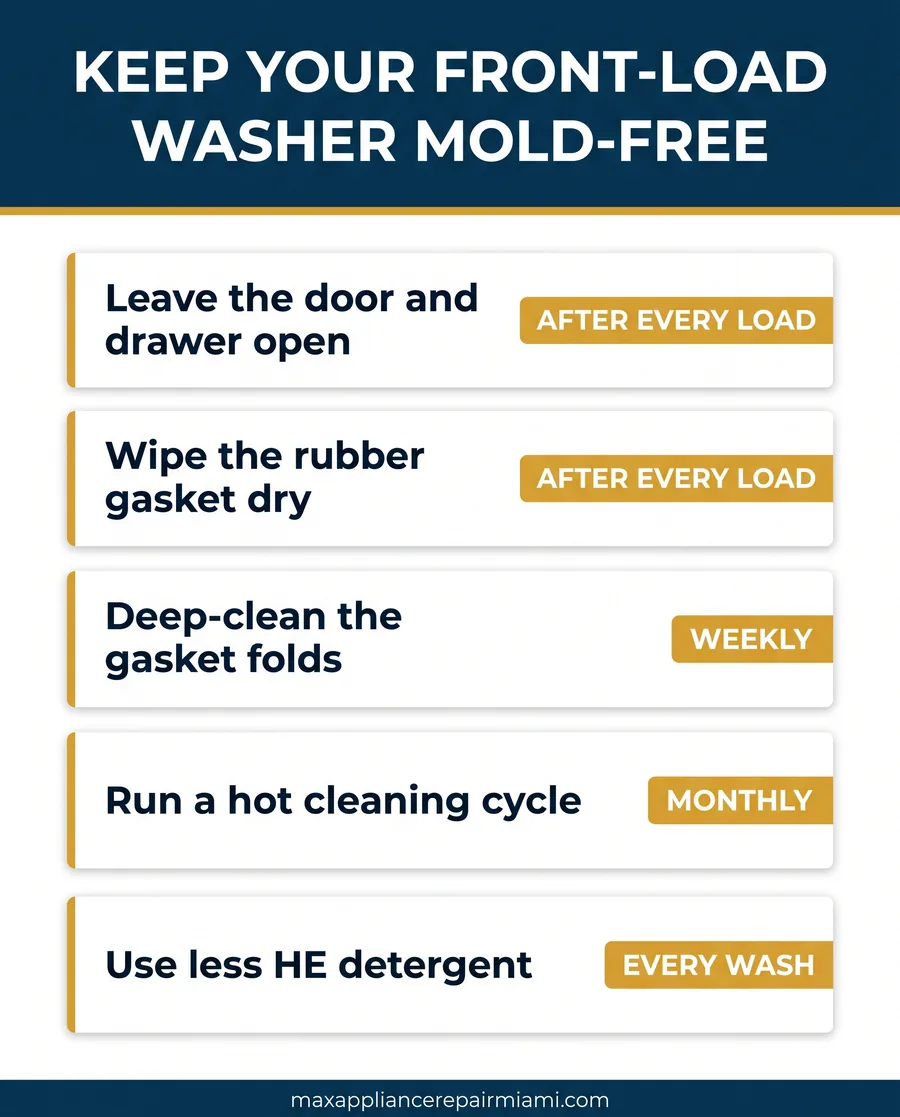
- Leave the door and detergent drawer cracked open after every load so air can circulate and dry the drum and seal.
- Wipe the rubber gasket dry after washing, lifting the folds to remove visible residue, water, and lint that hide there.
- Follow the washer manufacturer’s tub-clean procedure and use only an approved cleaner once a month.
- Switch to high-efficiency (HE) detergent and use only the recommended amount, as detergent residue feeds mold.
- Move wet laundry to the dryer promptly instead of letting it sit warm and damp inside the drum.
- Correct any drainage or lingering moisture problems quickly.
Consistently following these steps minimizes musty odors. Skipping maintenance during humid summer months will quickly lead to visible buildup.
Pro tip
Keep a small microfiber towel folded on top of the washer just for the gasket. Making the wipe-down effortless helps ensure it gets done every time. Taking ten seconds after the last load of the day keeps the seal dry overnight, when Miami humidity is at its worst.
The door gasket: where mold hides first
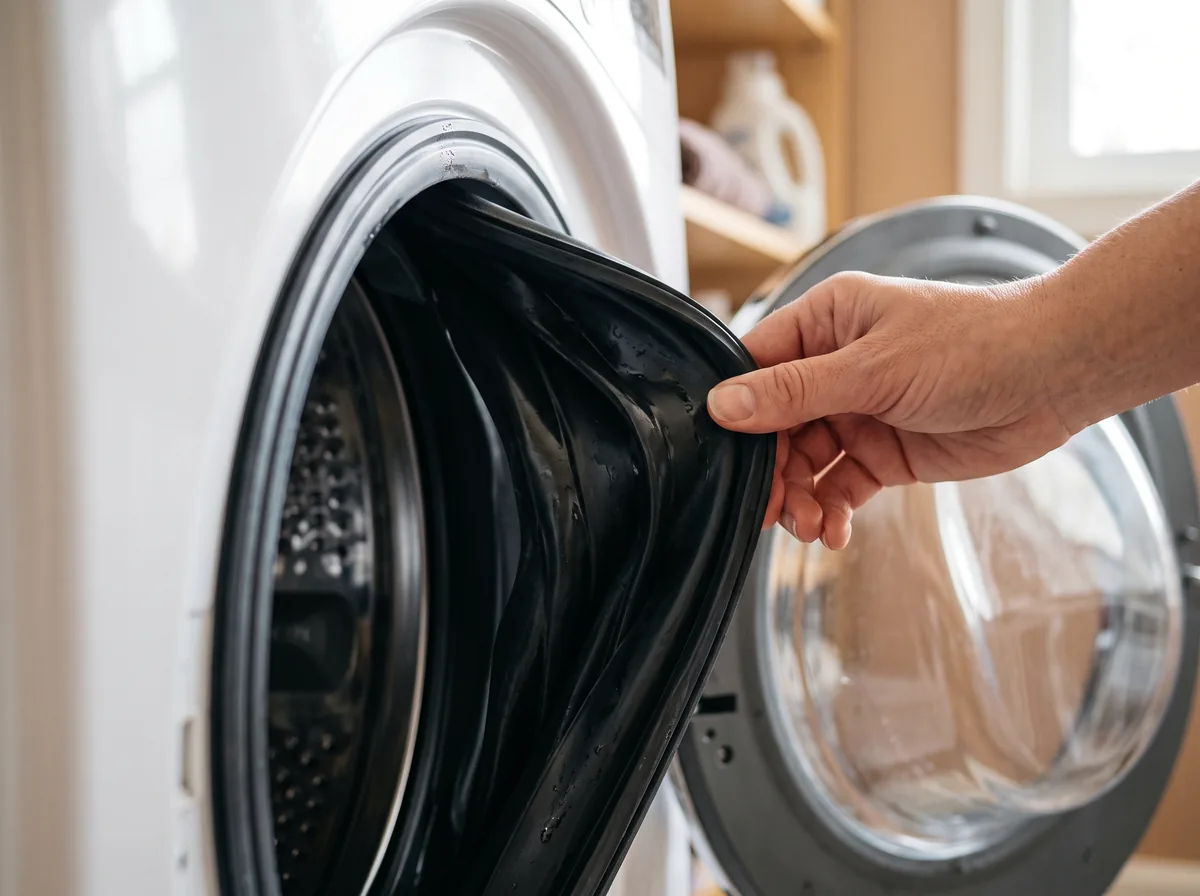
Peel back the rubber gasket around the washer door and look into the folds. That is where mold commonly shows up first, as a dark ring in the crevice, because water and lint collect there and stay damp. It is often the source of unpleasant smells.
Wiping it dry after each wash is essential. Once a week, go further: fold the seal back, remove visible residue like hair, coins, and lint, and wipe the whole channel with a cloth. A neglected gasket in a humid Miami laundry room degrades quickly without attention.
People often ask: why does my front-load washer smell, but not a top-loader?
Top-load washers sit open at the top and drain differently, making air-drying easier between loads. Front-loaders seal tight on the side and retain water in the door gasket and sump. Front-loaders simply require regular door-opening and gasket-wiping habits to manage humidity buildup.
Running a regular cleaning cycle
- Empty the drum completely. The cleaning cycle requires an empty machine.
- Follow the washer manufacturer’s tub-clean procedure and use only an approved cleaner. Never mix cleaning products.
- Select the designated tub-clean setting or recommended hot cycle as outlined in your manual.
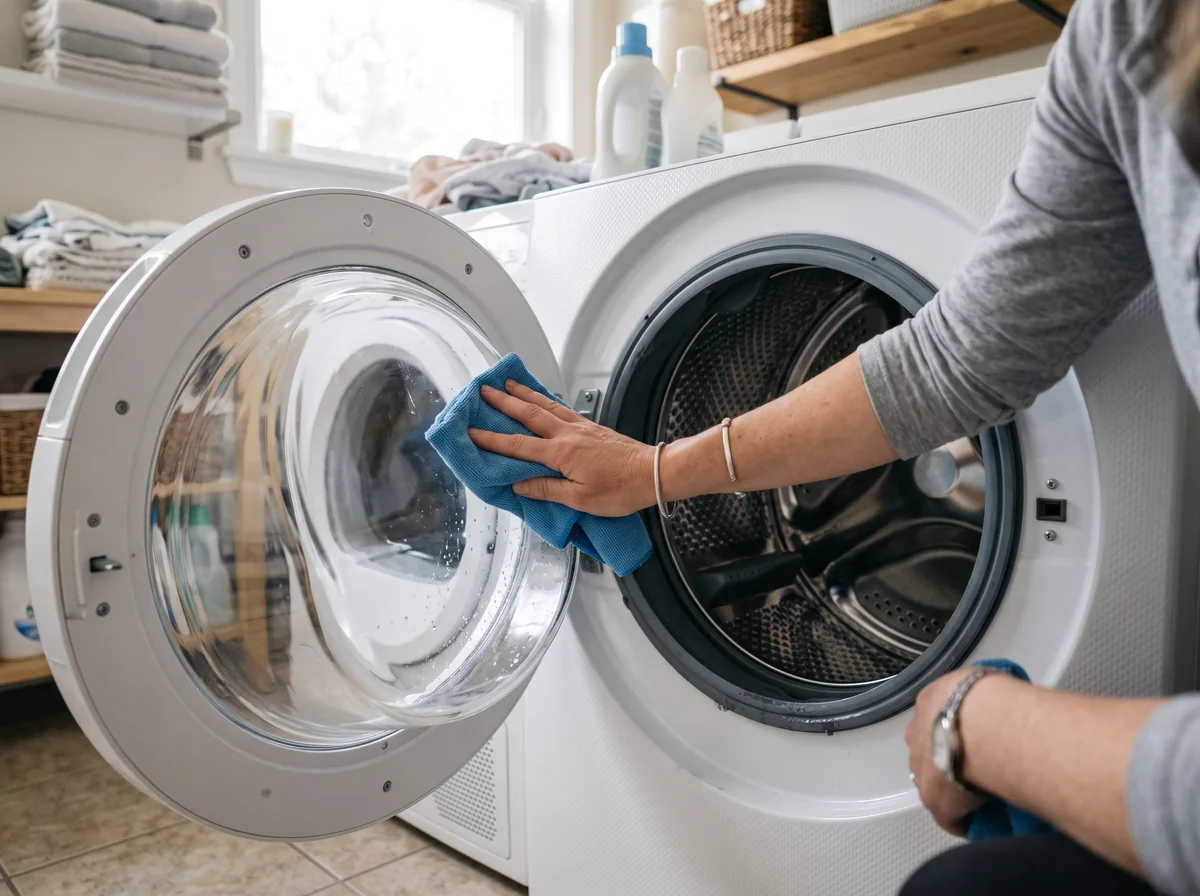
- After it finishes, remove visible residue and wipe the drum, the glass, and every fold of the door gasket with a dry cloth.
- Pull out the detergent drawer, scrub off any soap residue, rinse it, and leave it out to dry.
- Check and clear the drain-pump filter behind the access panel, where lint and debris collect, to correct drainage or moisture problems.
- Leave the door open so the interior dries fully before the next load.
Mold growth is tied directly to indoor moisture levels. For homeowners managing high humidity, the EPA guidance on mold and health outlines why controlling indoor moisture matters.
Here is how to structure your maintenance routine:
| How often | What to do | Why it matters in Miami |
|---|---|---|
| After every load | Leave door open; dry the gasket and remove visible residue | Prevents water from sitting in the seal overnight |
| Weekly | Deep-wipe the gasket, clear lint and trapped debris | High humidity speeds up residue buildup in the seal |
| Monthly | Run manufacturer’s tub-clean cycle with an approved cleaner; clean drawer and filter | Removes internal soap film and ensures proper drainage |
| Watch for | Musty odor, dark discoloration in the seal, standing water | Early warning signs of poor drainage or excess moisture |
Already smell mold? How to clear it
If you notice a strong musty smell, run your washer manufacturer’s tub-clean cycle using an approved washer cleaner according to the product instructions. Next, wipe down the gasket by hand, lifting the folds to remove all visible residue and debris with a soft cloth or brush. Never mix cleaning products.
Wipe the gasket completely dry, check that the drain-pump filter is clear to address drainage issues, and leave the door open. Consistent drying and routine maintenance are necessary to prevent odor from returning. If moisture issues persist, a technician can check for internal drainage obstructions.
Download the free quick guide
A one-page checklist to help keep your front-load washer clean through Miami’s humid summers.
Frequently Asked Questions
Fighting a washer that smells no matter how often you clean it? Max Appliance Repair Miami handles front-load washer faults and drainage issues across Hialeah, Miami Beach, Aventura, and the wider Miami area. Book a washer diagnosis and we will locate the source of the moisture problem.