
What Is Appliance Short Cycling and Why Does It Happen in Miami?
Ever notice your fridge or air conditioner switch on, run for less than a minute, then shut off again, only to repeat the same cycle a few minutes later? That stop-start-stop pattern has a name. Appliance short cycling is when a motor-driven appliance turns on and off far more often than it should, without ever completing a normal cycle. It wastes energy, wears out parts, and in Miami it shows up more often than almost anywhere else in the country. If your refrigerator is the one acting up, our Miami refrigerator repair team sees this exact problem week in and week out.
This guide explains what short cycling actually is, why our climate makes it worse, how to spot it across different appliances, and when a quick reset will do versus when you need to call a technician. Most of it comes down to one idea: an appliance that cannot shed heat will protect itself by shutting down.
What short cycling actually means
Most appliances with a compressor or a heating element are built to run in steady cycles. A refrigerator compressor, for example, runs until the inside hits the target temperature, then rests. Short cycling breaks that rhythm. The appliance starts, runs for only seconds or a minute or two, then trips off, and the gap before it restarts is short and irregular.
Behind the scenes, a safety device is usually doing its job. Compressors and motors have an overload protector that cuts power when the unit draws too much current or runs too hot. When something is wrong, that protector keeps interrupting the start, so you hear the appliance try, fail, rest, and try again. The clicking or humming you sometimes hear during this is the start relay and overload cutting in and out.
Did you know? Short cycling is a symptom, not a disease
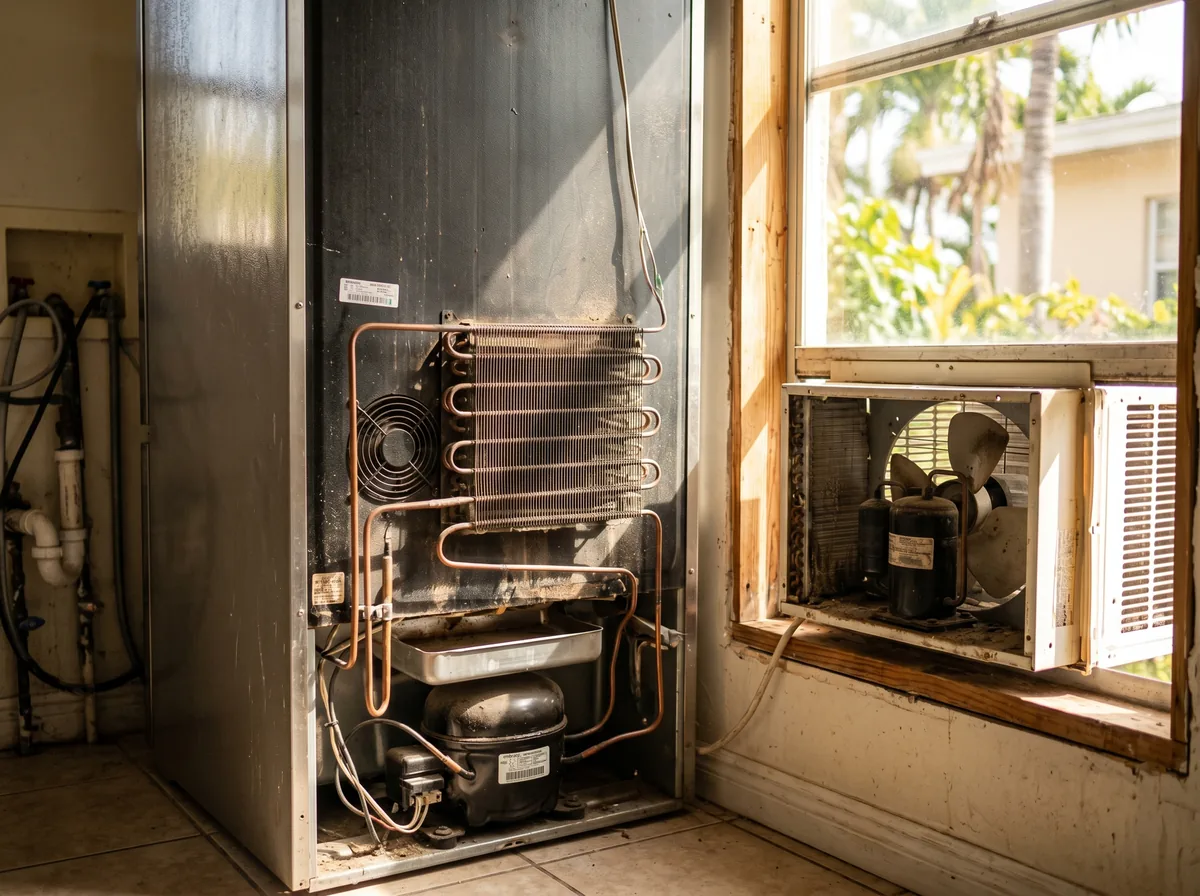
Short cycling almost never means the whole appliance is dead. It is the appliance telling you it cannot finish a normal run, usually because it is too hot, starved of airflow, low on refrigerant, or fighting a weak electrical supply. Read it as a warning light, not a death sentence. The sooner you find the cause, the cheaper the fix tends to be.
Why short cycling happens so often in Miami
Every appliance with a compressor works by moving heat from inside the unit to the air around it. That job is only as easy as the surrounding air is cool and dry. Miami gives an appliance neither. Summer highs sit in the low 90s Fahrenheit for months, indoor humidity runs high, and a fridge tucked into a hot kitchen or a garage has to work overtime just to keep up. When a compressor cannot dump its heat fast enough, it overheats and the overload trips. You can read more about how Miami’s climate affects your home appliances in our companion guide.
- Heat load. A kitchen that sits at 80 degrees or higher gives a refrigerator far less room to reject heat, so the compressor runs hot and trips more easily.
- Humidity. Damp air ices up coils and clogs drains faster, and moisture creeps into electrical connections, both of which push a unit toward short cycling.
- Salt air. Homes near the coast in Miami Beach, Key Biscayne, and Sunny Isles get salt on condenser coils and electrical contacts, which corrodes them and disrupts the start.
- Power swings. Summer storms, an overloaded grid, and hurricane-season generator use all cause voltage to sag or spike. A compressor that does not get clean, steady voltage struggles to start and may short cycle.
People often ask: does Miami heat really make appliances cut out?
Yes, more than most homeowners expect. An appliance rejects heat to the room around it, so when that room is hot and humid the unit runs hotter and longer and is more likely to overheat and trip. A garage fridge in a Miami summer is the classic example. It can short cycle simply because the space around it is too warm for it to keep up. Moving it somewhere cooler, or giving the coils room to breathe, often solves it.
Which appliances short cycle, and how to tell
Short cycling is most common in anything with a compressor or a thermostat-driven heater. Here is what it looks like across the appliances we get called about most in Miami homes.
| Appliance | What short cycling looks like | Why it matters |
|---|---|---|
| Refrigerator / freezer | Compressor hums or clicks on, runs briefly, then stops; interior warms up | Food safety risk; rising energy bills |
| Air conditioner / window unit | Cools for a minute, shuts off, restarts within minutes; never reaches set temp | Comfort and humidity control suffer |
| Ice machine | Starts a batch, stops mid-cycle, makes little or no ice | Common in coastal and high-use Miami kitchens |
| Electric range / oven | Element cycles on and off rapidly; oven never holds temperature | Uneven cooking; possible control or sensor fault |
| Dehumidifier | Runs seconds at a time, tank never fills | Important in humid Miami homes; often a coil or sensor issue |
The common causes behind short cycling
When we trace a short cycling appliance, the cause almost always falls into one of these buckets. They share a theme: the appliance cannot run a full cycle because something is overheating it, starving it of airflow, or choking its electrical supply.
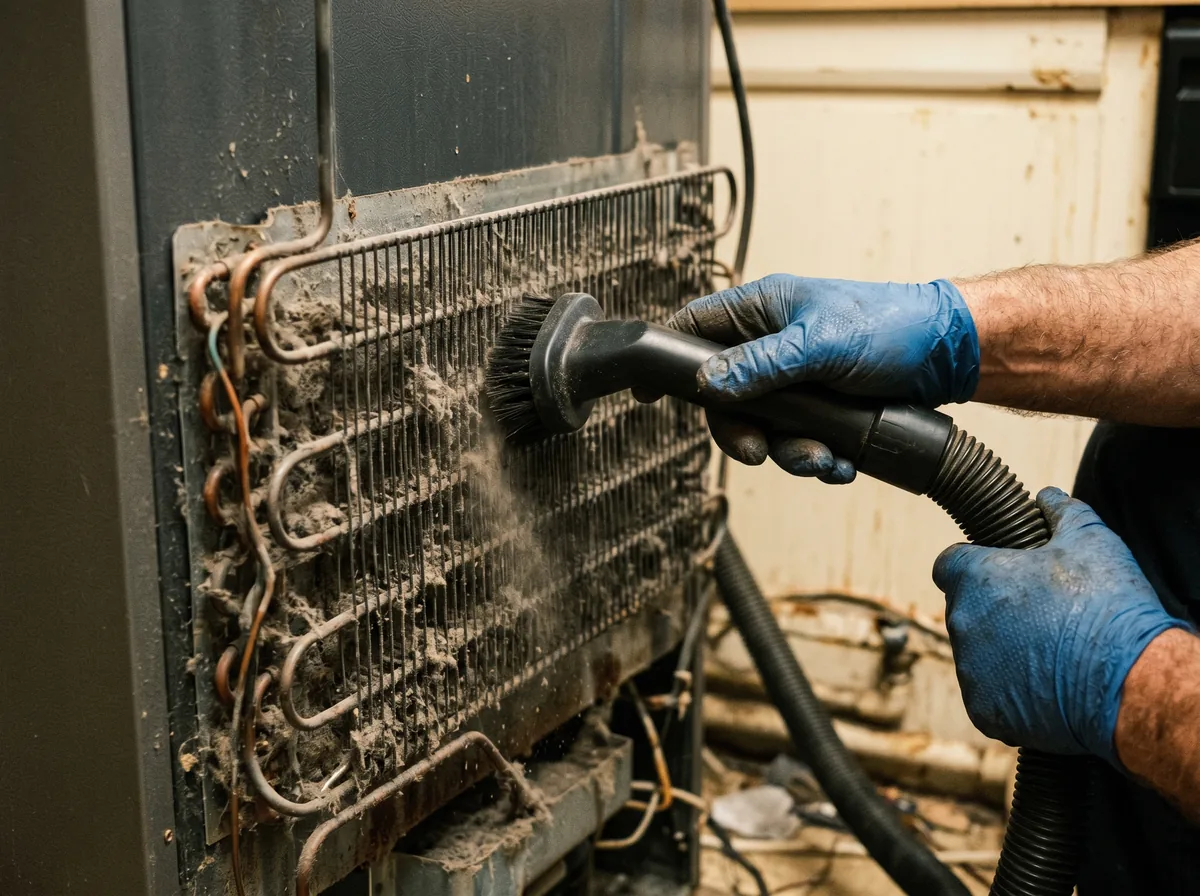
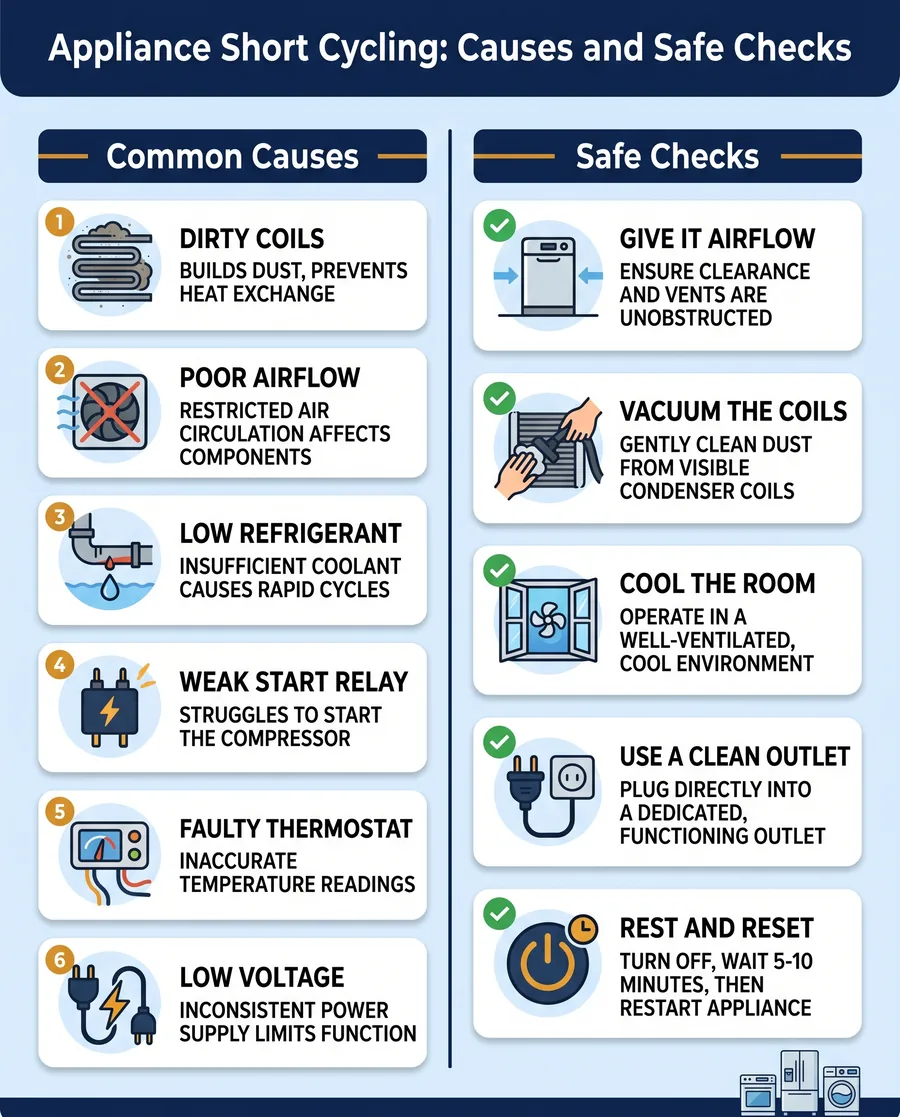
- Dirty or blocked condenser coils. Dust, pet hair, and Miami’s fine coastal grit blanket the coils so the compressor cannot shed heat. This is the single most common cause we find.
- Poor airflow around the unit. A fridge jammed against a wall, or a window AC with a blocked vent, traps heat and forces the overload to trip.
- Low refrigerant or a sealed-system fault. A leak in the sealed system makes the compressor cycle on and off because it cannot build proper pressure. This is a job for a licensed technician only.
- A failing start relay or capacitor. These help the compressor start. When they weaken, the motor cannot get going and the overload keeps interrupting it.
- A faulty thermostat or control board. A sensor reading the wrong temperature can switch the unit on and off at the wrong moments.
- Electrical supply problems. Low voltage from a long or overloaded circuit, a tired generator, or a brownout makes the compressor strain and trip.
Stop here: do not open sealed or electrical parts
If short cycling traces back to refrigerant, wiring, a capacitor, or the compressor itself, that is where do-it-yourself ends. Capacitors can hold a dangerous charge even after the appliance is unplugged, refrigerant work is regulated and requires certification, and a miswired repair is a fire risk. Unplug the appliance and call a qualified technician or a licensed electrician. The fix is rarely worth a shock or a house fire.
Safe checks you can do yourself
Safety note: The tips here are for general guidance only. Max Appliance Repair Miami is not responsible for any damage, injury, or cost resulting from action taken based on this content. Always unplug an appliance before inspecting it. Never attempt repairs to electrical wiring, sealed refrigerant systems, or gas lines yourself. If a step calls for opening the cabinet, touching wiring, or anything you are not fully comfortable with, stop and call a qualified appliance technician or a licensed electrician.
Before you book a service call, there are a handful of safe, no-tools checks that solve a surprising share of short cycling cases, especially the ones driven by heat and airflow.
- Give it room to breathe. Pull the fridge a few inches off the wall and clear clutter from on top and around it. For a window AC, make sure nothing blocks the outside vents.
- Vacuum the coils. With the unit unplugged, gently vacuum and brush the condenser coils (often behind or beneath a fridge). Do this every few months in Miami; dust builds up fast here.
- Check the room temperature. A garage or sun-baked utility room may simply be too hot for the appliance. Move it somewhere cooler if you can.
- Try a clean outlet. Plug the appliance directly into a known-good wall outlet, not a power strip or a long extension cord, to rule out a weak supply.
- Let it rest, then reset. Unplug for five minutes, then plug back in. A one-time overload trip sometimes clears. If it short cycles again right away, the cause is still there.
If the appliance still short cycles after airflow and a clean outlet are sorted, the problem is internal. That is usually a relay, a capacitor, a sensor, or the sealed system, and reading any appliance error code the unit shows can help your technician arrive with the right part.
When to stop and call a technician
Short cycling is one of those problems where waiting rarely helps and often makes it worse. A compressor that keeps trying to start under strain can burn out, turning a small repair into a major one. Call a technician when:
- The appliance still short cycles after you have cleared airflow, cleaned the coils, and tried a clean outlet.
- You hear repeated clicking or humming but the compressor never runs for long.
- A fridge or freezer is warming up, which puts your food at risk.
- You suspect a refrigerant leak, a capacitor, or anything behind a panel.
In those cases, a proper diagnosis is faster and cheaper than guessing at parts. Our team handles freezer repair, range repair, and ice machine repair across Miami-Dade and Broward, and we carry the common relays and sensors that cause short cycling so most jobs are done in one visit.
Pricing note: The figures on this page reflect typical market rates in the Miami area (USD) as of 2026. What you actually pay depends on the appliance, the brand, the parts involved, and how easy the unit is to access. Always get a written quote or an in-person diagnosis before approving any repair.
Sources and further reading
- Max Appliance Repair Miami, field diagnostics across Miami-Dade and Broward, 2026.
- U.S. Department of Energy, guidance on appliance and air conditioner efficiency and maintenance.
- ENERGY STAR, refrigerator and room air conditioner maintenance recommendations.
- Word of Advice TV, “Air Conditioner Short Cycling – 10 Possible Causes” (video, embedded above).
Frequently asked questions
Is short cycling dangerous?
On its own, short cycling is usually a warning rather than an immediate danger, but it should not be ignored. A compressor or motor that keeps trying to start under strain draws heavy current and runs hot, which over time can overheat wiring or burn out the motor. If you smell burning, see scorch marks, or the appliance feels very hot, unplug it and call a technician. The bigger everyday risk in a fridge or freezer is spoiled food, since the unit cannot hold temperature. Address the cause promptly to avoid a small fault becoming a costly or unsafe one.
Why does my fridge short cycle more in summer?
Because a refrigerator rejects heat into the room around it, and a hot, humid Miami summer gives it far less room to do that. When the kitchen or garage is warm, the compressor runs hotter and longer and is more likely to overheat and trip its overload protector. Dirty condenser coils make it worse, since they trap even more heat. Summer also brings power sags from storms and grid strain, which can stop a compressor from starting cleanly. Keeping the coils clean and giving the fridge airflow helps it cope with the heat.
Can I fix appliance short cycling myself?
You can safely handle the most common causes, which are about heat and airflow. Unplug the appliance, vacuum the condenser coils, pull it away from the wall for ventilation, plug it into a clean wall outlet rather than a power strip, and make sure the room is not too hot. Those steps fix a real share of cases. What you should never do yourself is open the sealed refrigerant system, replace a capacitor, or touch internal wiring. Those are regulated, can be dangerous, and are best left to a qualified technician or licensed electrician.
How much does it cost to repair short cycling in Miami?
It depends entirely on the cause. If it is dirty coils or poor airflow, a maintenance visit is at the low end and sometimes you can solve it yourself for free. A failed start relay or capacitor is a modest parts-plus-labor repair. A sealed-system or refrigerant fault is the most involved and the most expensive, because it requires certified work. The honest answer is that you need a diagnosis first. Always ask for a written estimate before approving any repair, and weigh the cost against the age and value of the appliance.
The bottom line
Appliance short cycling is your appliance protecting itself from heat, poor airflow, low refrigerant, or a weak electrical supply. In Miami, our climate stacks the deck, so coils clog faster, rooms run hotter, and the grid takes a beating in storm season. Start with the safe checks: clean the coils, give the unit room to breathe, and use a clean outlet. If it keeps cutting out after that, the cause is internal and it pays to call a technician before a small fault becomes a dead compressor.
Download the free quick guide
Keep our one-page short cycling checklist handy so you can run the safe checks and know exactly when to call for help.
Appliance cutting out in Miami? Let’s find the cause.
We diagnose and fix short cycling fridges, freezers, ranges, and ice machines across Miami-Dade and Broward, often same day. Tell us what your appliance is doing and we will get a technician out. Book a Miami appliance repair visit or see our refrigerator repair service.
Further reading: U.S. Consumer Product Safety Commission.