
Why Your Electric Stove Burner Will Not Heat Up
One burner is stone cold while the other three glow like normal. If you have an electric stove burner not working, it is almost never the whole range failing or a major house wiring problem. The usual suspects are a bad heating element, a dirty connection, or a faulty switch. While many simple fixes involve low-cost parts, understanding why your electric stove burner will not heat up will help you decide between a quick DIY fix or calling in professional help.
The key is identifying the exact culprit before purchasing replacement parts. Below is a practical guide to troubleshooting the causes, attempting safe checks, and knowing when to contact a technician.
Start here before you assume the worst
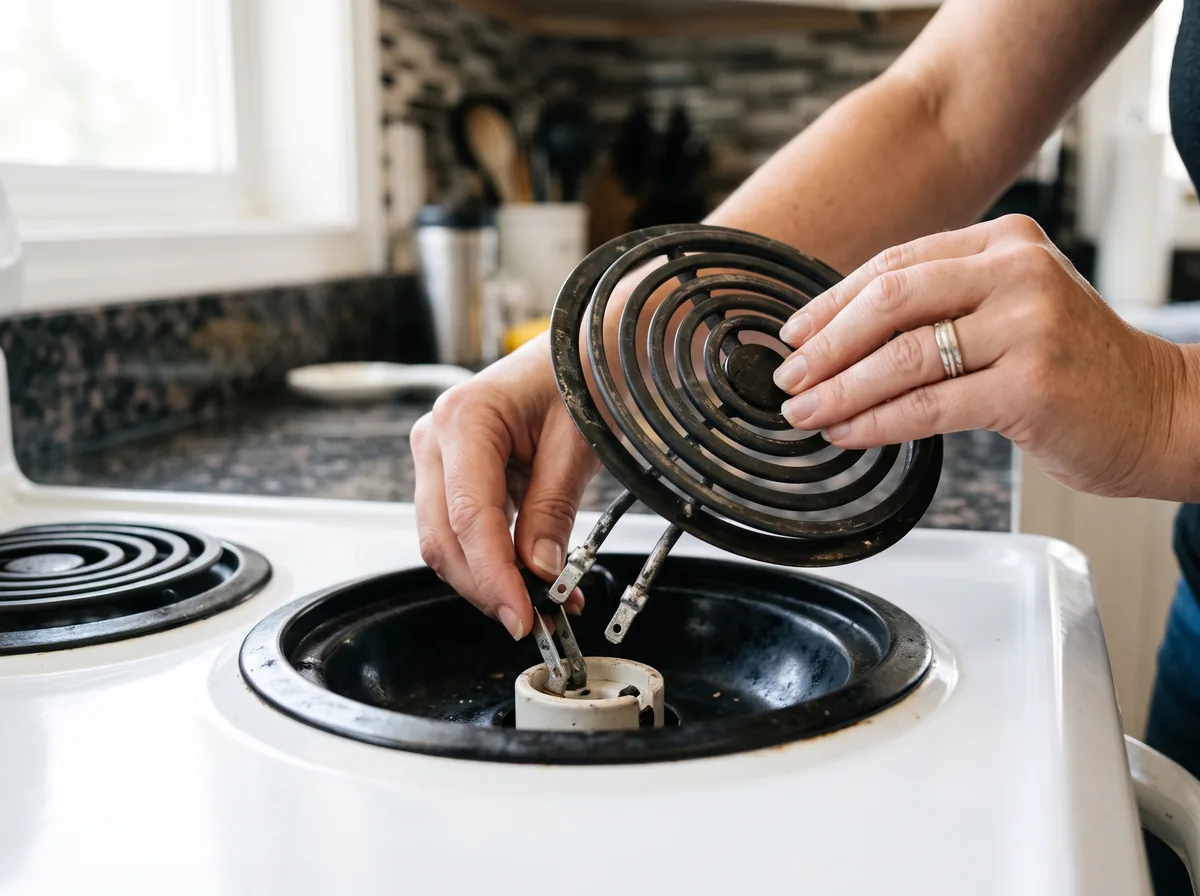
Before disassembling any components, rule out basic operational factors. On a coil-top range, verify that the element is seated securely inside its socket. These components plug in like an outlet and can loosen from cleaning or pan movement. Reseat the element firmly and test it again.
On a smooth-top range, check that the control lock is disengaged and that you are turning the correct dial. Confirm the range is receiving power by testing the other burners. If all other burners function properly, the fault is isolated to a single burner assembly.
Quick take
If only one burner fails while the rest operate, the issue is isolated to that specific burner’s element, socket, or infinite switch. An entire cooktop failing at once typically points to a main power supply or control board fault.
Common causes of an electric stove burner not heating
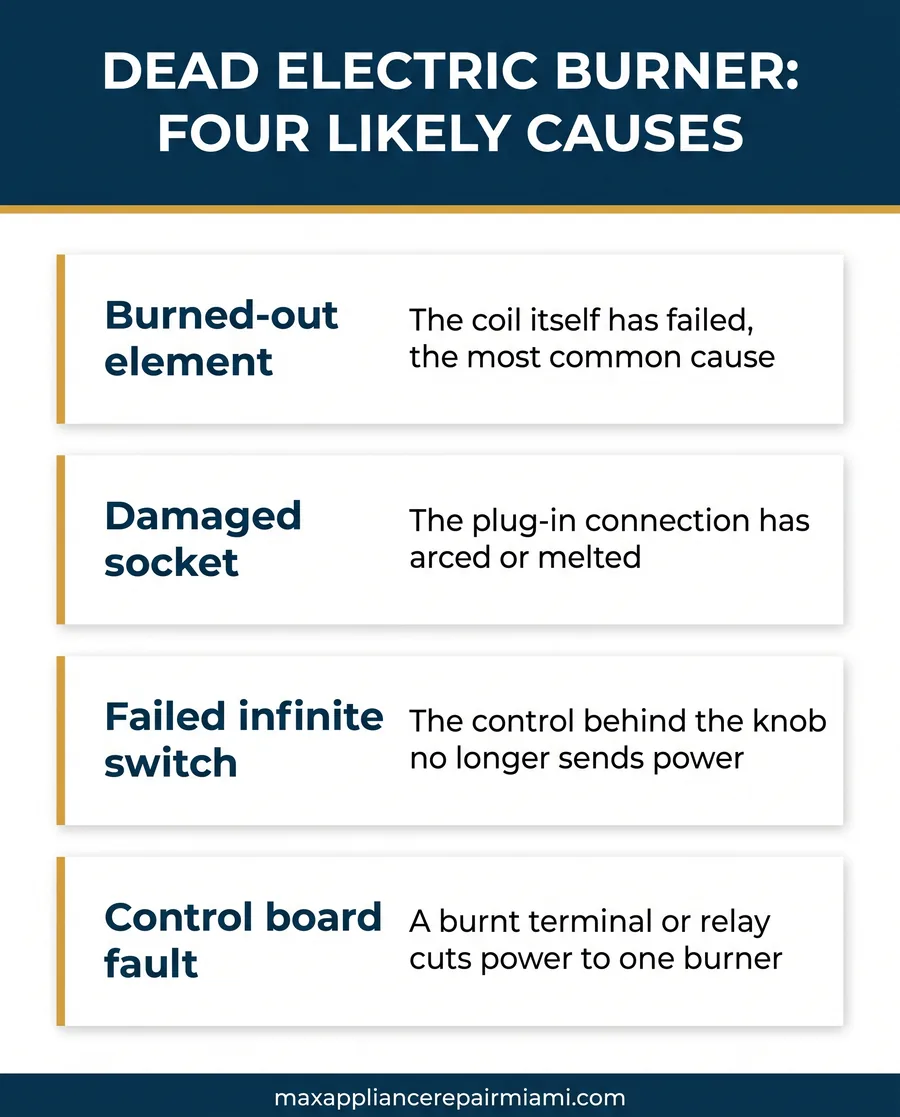
When a single burner stops heating, the root cause usually stems from one of four components:
- Burned-out heating element: The metal coil or radiant element under the glass has failed internally and can no longer draw electrical current.
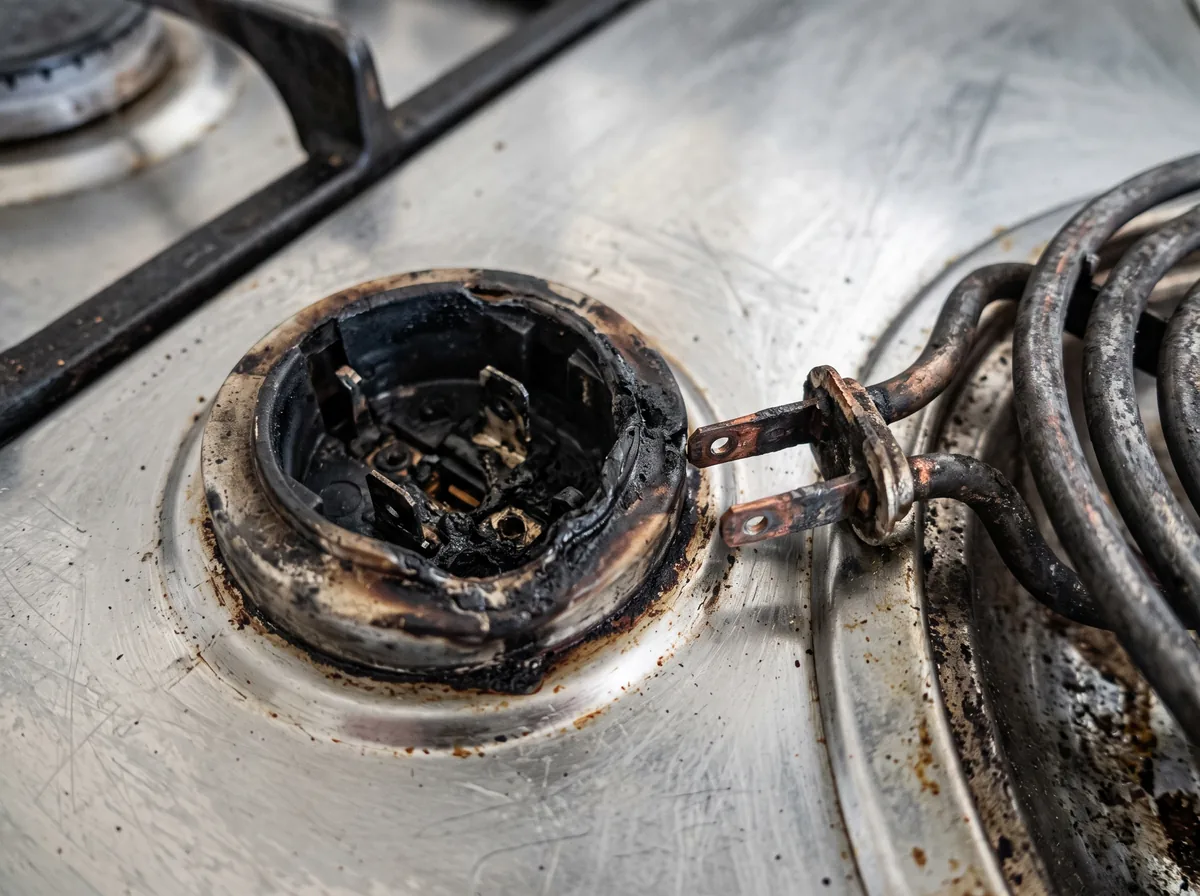
- Damaged element socket: The connection point has arced, melted, or corroded, preventing current flow to the prongs.
- Failed infinite switch: The control dial switch behind the panel has failed, preventing power from reaching the element connection.
- Control board or wiring fault: Damaged terminal wires or a failed relay on the electronic board cut power to that specific heating zone.
Did you know?
A damaged element socket is frequently mistaken for a failed element. Installing a new element into a scorched socket will cause the new part to fail quickly due to arcing. Always inspect the receptacle for discoloration or melting before purchasing replacement parts.
A cause and fix guide for a dead burner
If you are experiencing an electric stove burner not working, use this breakdown to evaluate symptoms, diagnostic steps, and estimated part costs:
| Likely Cause | Observed Symptom | Confirmation Method | Typical Part Cost |
|---|---|---|---|
| Burned-out element | Burner will not heat; may show visible blisters or cracks | Perform a swap test or verify electrical continuity with a multimeter | $20 to $60 |
| Damaged socket | Burner flickers, heats weak, or socket shows melting | Inspect receptacle interior for scorch marks and corrosion | $15 to $50 |
| Failed infinite switch | Burner remains cold or stays stuck on maximum heat setting | Test voltage output behind control panel using safety equipment | $25 to $80 |
| Control board or wiring | Single burner dead; element and switch verify as operational | Inspect board relays, trace wiring, and test circuit outputs | $90 to $250+ |
Cost Considerations
Evaluate repair costs relative to the age of your appliance. If a dead burner requires a costly control board on an older unit, complete replacement of the range may prove more economical long-term.
Coil burners and smooth tops fail differently
The style of cooktop dictates how component testing is performed. Coil burners allow straightforward troubleshooting because elements plug in directly by hand. Swapping a non-heating coil to test functionality is straightforward, making an electric stove burner not working on a coil cooktop easier to diagnose.
Smooth-top ceramic ranges require a different approach. Radiant heating elements sit sealed beneath the glass top. Reaching these elements requires dismantling the cooktop housing and working near 240-volt electrical connections. A certified range repair technician can safely remove the glass surface without risking expensive structural damage.
Can I swap burners to test for a fault?
On coil-top stoves, swapping a working element of matching size into the non-functional socket quickly isolates the failure. If the working element heats in the new position, the original element requires replacement. Smooth-top ranges do not support this test without disassembly.
What you can safely check yourself
Follow these safe diagnostic steps when addressing an electric stove burner not working on a coil-style appliance:
- Turn off power to the range and allow all heating elements to cool completely.
- Disconnect the coil element by pulling it firmly outward from its socket connection.
- Inspect the element prongs for corrosion, bending, or electrical burn marks.
- Check the interior of the terminal socket for melted plastic, severe pitting, or scorching.
- Re-insert an undamaged element firmly into the receptacle to rule out loose fitting.
- Swap in a functional, matching-size element from another position to isolate component failure.
Pro Tip
Ensure correct part matching before ordering replacements. Coil elements vary in diameter, terminal prong orientation, and wattage ratings. Reference your appliance model number located on the frame behind the oven door when ordering replacement components.
When a cold burner needs a technician
While replacing a coil element is a manageable DIY task, internal switch and wiring repairs carry safety risks. Infinite switches and internal control boards handle high voltage levels. Smooth-top repairs also require specialized handling to prevent cracking the glass assembly.
If basic element swapping does not resolve the issue, or if you own a smooth-top glass range, professional service ensures safe diagnosis and repair using calibrated testing instruments.
Download the free quick guide
A one-page diagnostic checklist for troubleshooting non-heating electric burners safely at home.
Frequently Asked Questions
Dealing with an electric stove burner not working does not automatically require purchasing a new appliance. Max Appliance Repair Miami provides complete diagnostic and repair services for electric ranges across Kendall, Coral Gables, Doral, and greater Miami-Dade. If basic troubleshooting steps do not restore operation, schedule a service visit to have a technician inspect your system.