

Built-In vs. Freestanding Refrigerators: Which Requires More Maintenance?
Here is the short answer to the built in vs freestanding refrigerator maintenance debate: A built-in fridge needs more frequent, deliberate upkeep than a freestanding one. Because it sits flush inside custom cabinetry, tighter airflow and harder-to-reach parts demand regular attention. Both styles can easily last over a decade with proper care, but a built-in requires proactive routine service to get there. If you own either style in South Florida, understanding these key differences and knowing where to turn for expert cooling appliance service in South Florida will save you money, time, and spoiled food.
Below, we break down how the two designs differ, compare the upkeep each requires side-by-side, and explain why Miami’s heat and humidity make routine coil cleaning essential for built-in models.
The core difference: how each fridge sheds heat
A refrigerator does not create cold; it extracts heat from inside the cabinet and dumps it into your kitchen. How each design dissipates that heat is the root cause of every maintenance distinction between them.
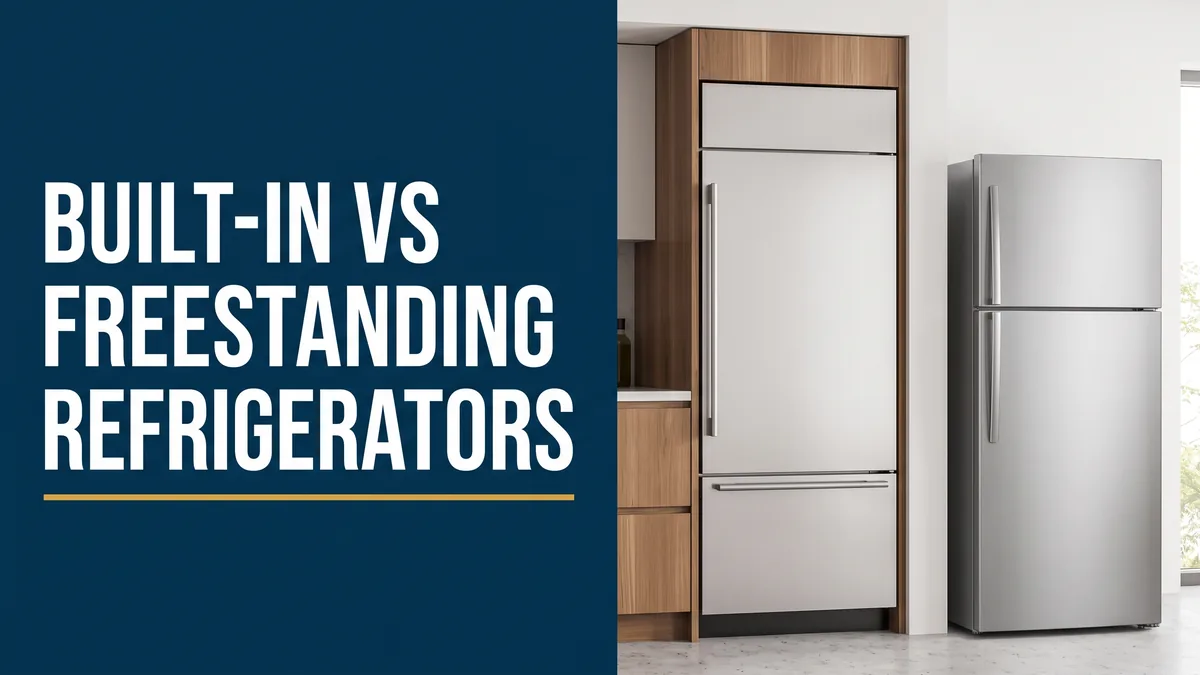
A freestanding refrigerator stands independently with ample ventilation space around and behind it. Its condenser coils vent into open air, making the unit easy to pull out and clean. In contrast, a built-in refrigerator sits completely flush with surrounding cabinetry. To operate within such tight quarters, it vents through a front grille, forcing its compressor and coils to work within a confined pocket with limited airflow. Restricted breathing space means the unit runs harder, making dust build-up far more damaging over time.
Quick take
Freestanding fridges cool into open air and are simple to clean around. Built-ins cool through a narrow grille inside custom cabinetry, meaning they run hotter, clog faster with dust, and require more frequent maintenance to match the same lifespan.

Built in vs freestanding refrigerator maintenance, side by side
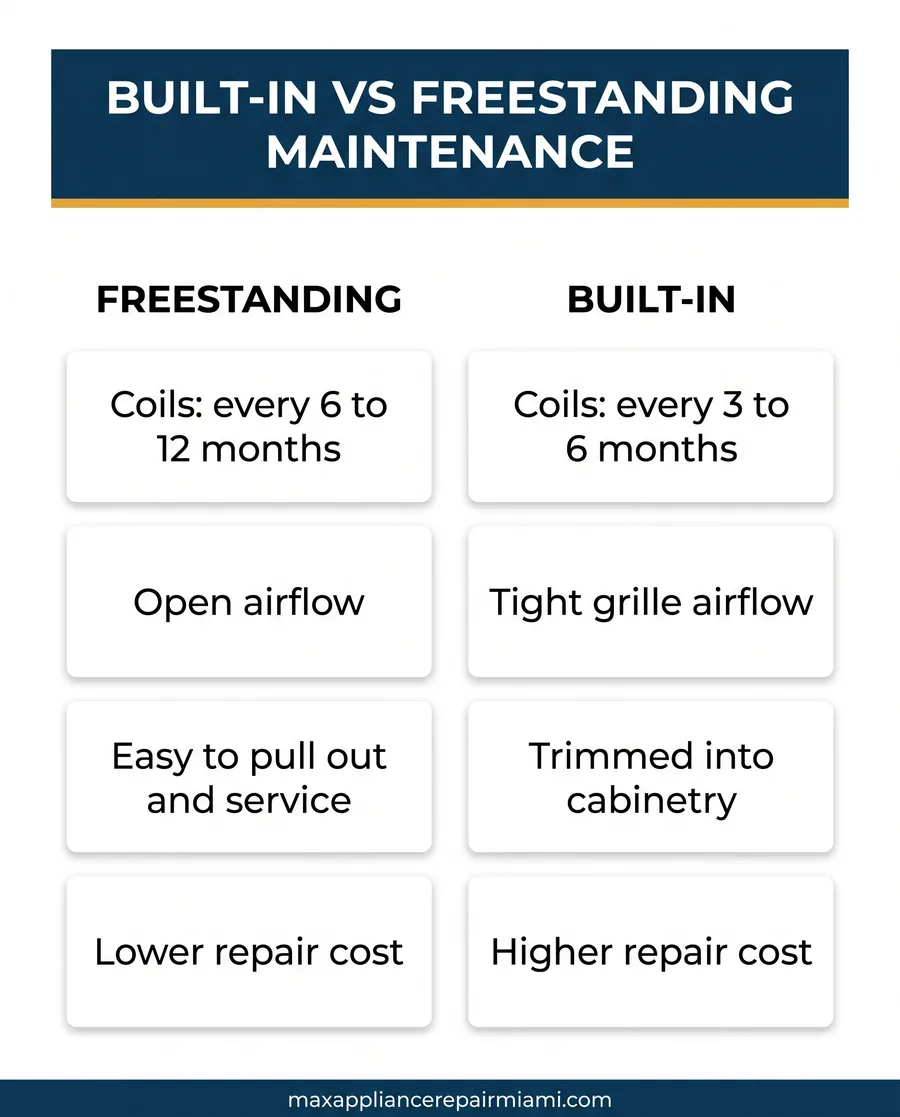
While both perform the same core function, their care requirements differ significantly. Comparing built in vs freestanding refrigerator maintenance side by side highlights where built-ins demand extra care and where both options are virtually equal.
| Maintenance task | Freestanding | Built-in |
|---|---|---|
| Condenser coil cleaning | Every 6 to 12 months; rear or bottom access | Every 3 to 6 months; accessed via grille |
| Airflow and clearance | Space behind and above the unit | Grille must stay clear; no space to spare |
| Access for service | Pull it out easily | Trimmed into cabinetry, tighter access |
| Condenser fan and vents | Occasional dusting | Needs regular clearing in a confined pocket |
| Door gasket checks | Same for both | Same for both |
| Water line and filter | Same for both | Same for both, filter often behind a panel |
| Typical repair cost | Lower, standard parts | Higher, specialized parts and labor |
Why built-ins demand more attention in Miami’s climate
Every refrigerator works harder in South Florida. The warmer and more humid the environment, the more heat the system must reject and the longer the compressor runs. A freestanding unit with open air circulation manages ambient heat relatively well. A built-in unit, already constrained by limited space, is particularly sensitive to Miami’s sub-tropical climate.
When enclosed in cabinetry, a built-in condenser struggles to shed heat efficiently into a warm room, an issue made worse when dust covers the vent grille. Running this setup through a humid summer leads to higher power bills, continuous compressor operation, and early component failure if maintenance is neglected. Understanding built in vs freestanding refrigerator maintenance rules helps homeowners prevent heat-related strain before expensive repairs occur. For a breakdown on energy management across different models, the official ENERGY STAR refrigerator guide provides helpful operational standards.
People often ask: do built-in refrigerators fail sooner in Florida?
Not inherently, but a neglected built-in certainly can. The compact ventilation that defines the design provides less room for error in a warm, humid environment, meaning skipped coil cleanings lead to failure much faster than on a freestanding unit. Maintained properly, a quality built-in will last just as long.
Coil cleaning and airflow: the core maintenance difference
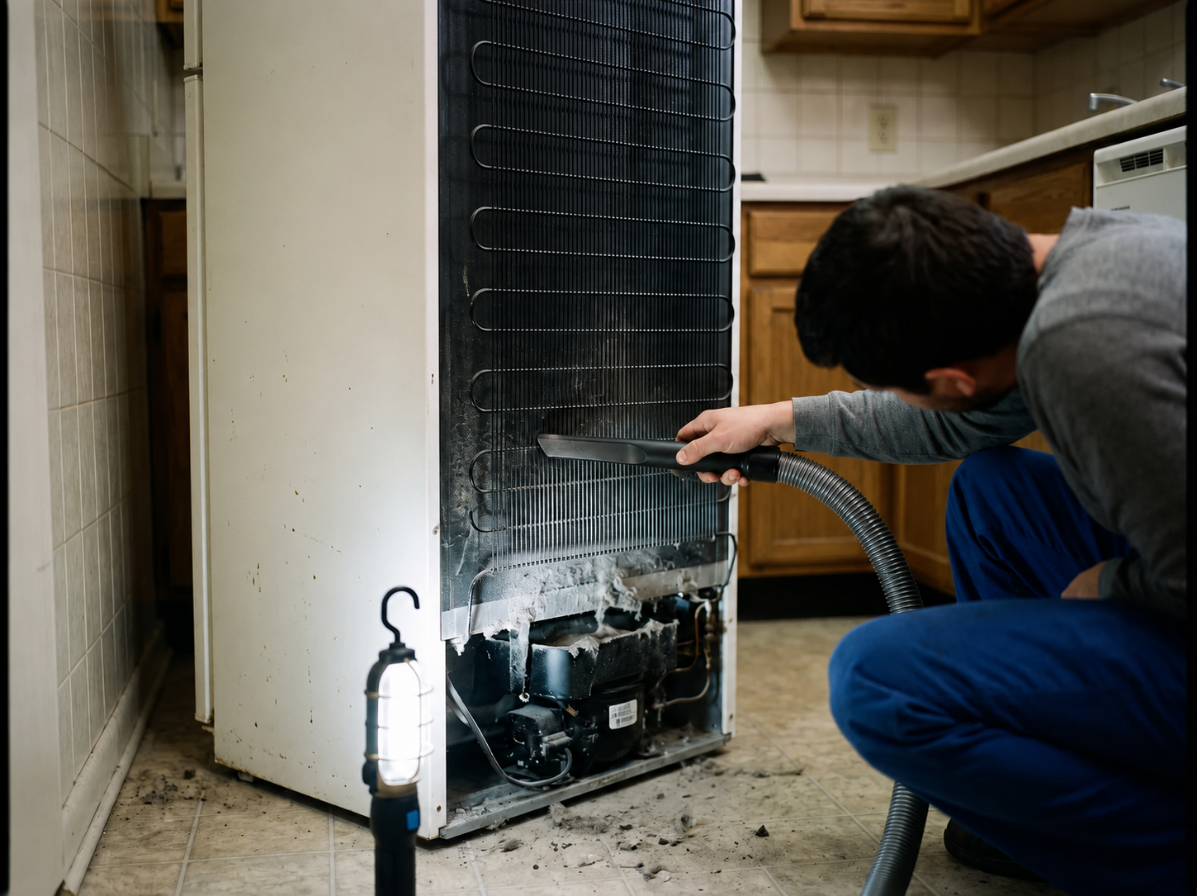
Most differences in overall lifespan come down to one routine habit: maintaining clear airflow across the condenser coils. However, how and how often you handle this task depends entirely on your appliance style:
- Built-In Refrigerators: Condenser coils are typically housed behind a top or bottom ventilation grille. Because they draw air through a narrow opening in custom cabinetry, dust builds up rapidly. Follow your manufacturer’s specific guidelines—for example, luxury brands like Sub-Zero recommend coil cleaning every 3 to 6 months—and inspect them even more frequently if you have shedding pets or a dusty kitchen environment.
- Freestanding Refrigerators: Coils are usually located along the bottom kick-plate or exposed on the rear. With open ambient airflow surrounding the unit, standard maintenance every 6 to 12 months is generally sufficient to prevent heat buildup.
For a complete, step-by-step walkthrough on safely turning off power, accessing your specific coil setup, and using the right cleaning tools, follow our detailed guide on how to clean your refrigerator coils step by step.
Pro tip
Always follow your manufacturer’s recommended schedule, but inspect your unit more frequently if you live with heavy-shedding pets, reside in a high-dust environment, or keep your home open to South Florida’s humid air. Servicing the coils right before summer protects the compressor when cooling loads peak.
Which is right for your home?
Neither configuration is universally superior; they involve distinct trade-offs. A built-in delivers an integrated, flush luxury aesthetic at the expense of higher upfront cost, tighter upkeep, and pricier repairs. A freestanding refrigerator is less expensive to purchase, simpler to service, and easier to replace, though it will not blend seamlessly into cabinetry. If custom integration is a priority and you are committed to regular maintenance, a built-in is ideal. If affordability and low maintenance take precedence, freestanding remains the practical choice.
Save your money
Regardless of style, keeping condenser coils clean is the single most cost-effective way to prevent unexpected breakdowns. Clogged coils force the cooling system to overwork, driving up energy costs and triggering early compressor failure.
Download the free quick guide
A concise checklist for managing refrigerator care and routine service schedules in South Florida.
Frequently Asked Questions
Whether built-in or freestanding, a refrigerator that is kept clean and properly ventilated is one that lasts. If your appliance stops cooling, leaks, or runs continuously, our experienced local appliance technicians service both configurations across Kendall, Pinecrest, Doral, and the surrounding Miami areas. Schedule a diagnostic service call in Miami today for dependable local repairs.