
The Real Reason Appliances Cost More to Run in Florida Than Almost Anywhere Else
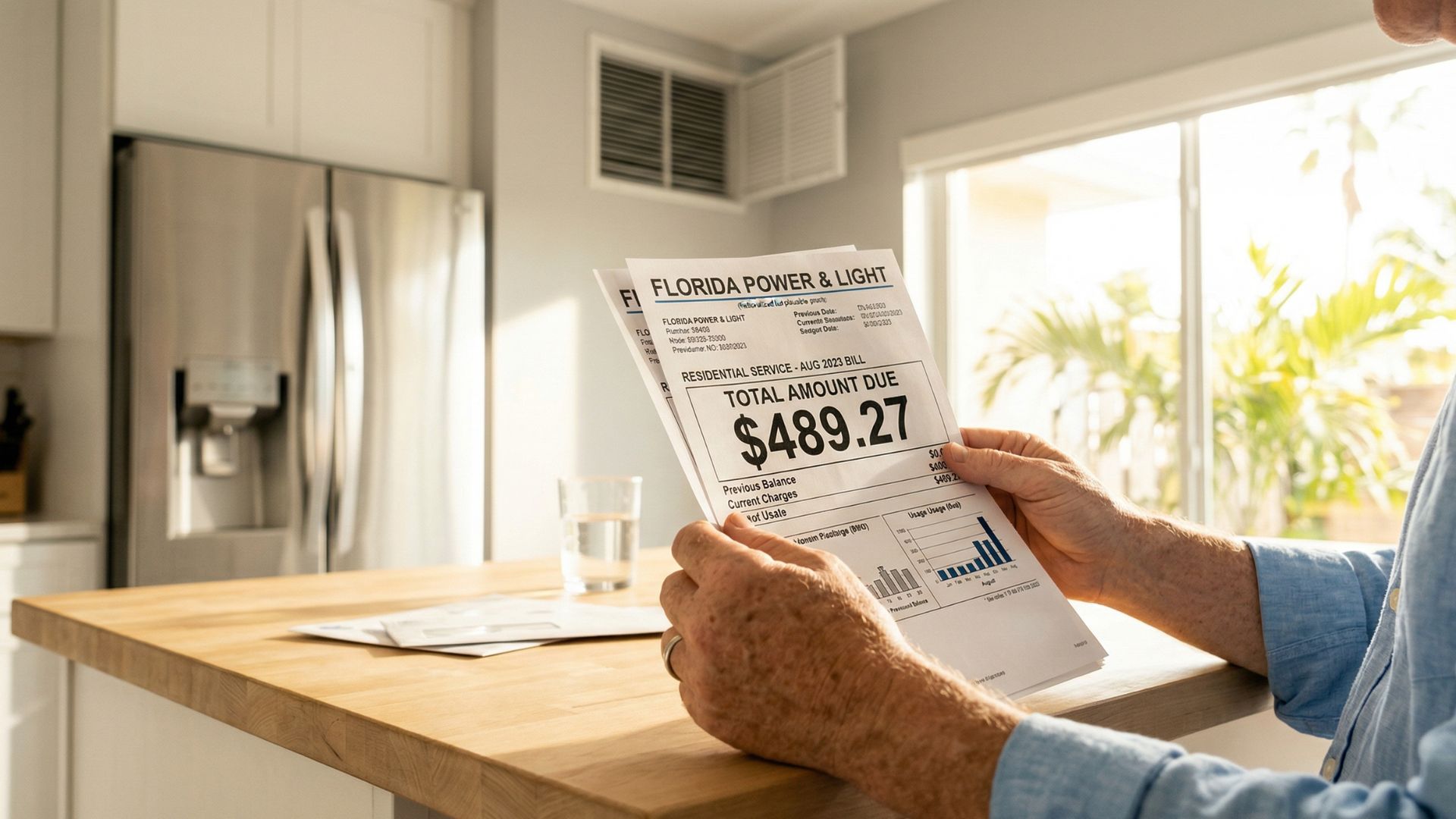
Florida Power and Light consistently reports that Florida households pay more to run their appliances than the national average, and not primarily because Floridians have larger homes or more appliances. The main driver is something most people do not think about: the climate forces every major appliance in your home to work significantly harder than it was designed to. Understanding exactly why this happens changes how you maintain your machines and, over time, what shows up on your monthly bill.
The Numbers Behind the Gap
According to the U.S. Energy Information Administration, Florida consistently ranks among the top states in the country for residential electricity consumption. The average Florida household uses roughly 40% more electricity than the national average. While air conditioning accounts for the largest share of that gap, kitchen and laundry appliances contribute more than most homeowners realise, particularly in South Florida where the difference between indoor and outdoor conditions is most extreme.
The mechanism is not complicated. Every appliance that generates or removes heat is working against the ambient environment. The hotter and more humid the ambient environment, the harder it has to work. And in Miami-Dade and Broward County, that ambient environment is among the most demanding in the continental United States for most of the year.
The Refrigerator: Running Against the Room
A refrigerator is essentially a machine that moves heat from inside its cabinet to outside it. The problem in South Florida is that outside the cabinet is already hot. Your kitchen may sit at 76 to 78 degrees with the air conditioning running. The fridge is trying to maintain 37 degrees inside. That is a 39 to 41 degree differential the compressor has to fight against, continuously, every minute of every day.
For comparison, a home in a climate that averages 65 degrees indoors has a differential of only 28 degrees. That smaller gap means the compressor cycles less frequently and runs for shorter periods when it does cycle. In simple terms: the same refrigerator, in the same house, requires the compressor to work roughly 30 to 40% harder in a South Florida kitchen than in a moderate climate kitchen.
This is why condenser coil cleaning matters so much more here. Dirty coils reduce the efficiency of that already-stressed heat transfer process and force the compressor to run even longer. In a moderate climate, slightly dirty coils are a minor inefficiency. In Miami in August, they can meaningfully increase electricity consumption and accelerate compressor wear.
The Dryer: Pushing Moisture Against Humidity
A dryer removes moisture from wet clothes by passing heated air through the drum and exhausting that moisture-laden air through the vent to the outside. The efficiency of that moisture transfer depends on how much the exhaust air can absorb relative to the outside air it is displacing.
When outside humidity is 85%, the exhaust air from the dryer has a much harder time leaving moisture behind as it exits the vent. The dryer effectively has to push harder to achieve the same drying effect. This is why dryers in South Florida routinely take longer to complete a cycle than the same model would in Arizona, even when the vent is perfectly clean.
The practical implication is that a partially blocked vent in South Florida has a disproportionate effect on drying time compared to the same partial blockage in a dry climate. In a dry climate, a 30% restricted vent still leaves enough capacity to exhaust moisture reasonably efficiently. In 85% ambient humidity, that same 30% restriction may cause drying times to nearly double. This is why we recommend vent cleaning every six months in this region rather than the once-a-year standard advice. Our guide on why dryers take too long to dry in South Florida explains the vent issue and what to check yourself.
The Dishwasher and Coffee Machine: Hard Water’s Hidden Tax
Hard water affects operating costs in a way that is less obvious than heat and humidity but equally real. Miami-Dade and Broward County water contains elevated levels of calcium and magnesium. Every time water passes through your dishwasher or coffee machine, it deposits a small amount of those minerals on the heating element, the spray arms, the pump, and the internal pipes.
Calcium deposits on a heating element act as insulation. They reduce the efficiency of heat transfer, which means the element has to run longer and draw more power to achieve the same water temperature. A dishwasher heating element with significant scale buildup can use 15 to 25% more electricity per cycle than a clean one running the same program.
The same principle applies to coffee machine boilers. Scale buildup inside the boiler means the machine takes longer to reach the target temperature and has to work harder to maintain it. This shows up as slower brewing, cooler output temperature, and higher electricity consumption, all of which worsen gradually until the machine is descaled. In South Florida, that descaling needs to happen every six to eight weeks, not every three months as most manuals suggest.
What This Means for Your Electricity Bill
The energy premium from climate conditions is not fixed. It changes with how well-maintained your appliances are. A refrigerator with clean coils, a good door seal, and adequate ventilation around it pays less of a climate penalty than one with dirty coils and a worn gasket. A dryer with a clean vent and a moisture-sensor cycle setting costs significantly less to run per load than one with a partially blocked vent running on a timed cycle.
The Florida Power and Light energy savings programs include tools for understanding where your household energy is going and rebates for qualifying efficiency upgrades. For homes with older appliances, the energy savings from replacement with a modern Energy Star certified model can be substantial, particularly for refrigerators that are over 12 years old.
For homes that want to address the energy cost without replacing appliances, the biggest single impact usually comes from dryer vent cleaning and refrigerator coil cleaning. Both are inexpensive to do and both have a direct, measurable effect on appliance energy consumption. Our South Florida appliance energy-saving guide covers the full list of practical steps with the specific adjustments that make sense for this climate.
The Compounding Effect Over Time
What makes the South Florida appliance energy premium especially worth understanding is that it compounds. A refrigerator running its compressor 35% harder than designed does not just cost more to run per month. It also wears out its compressor faster. A dryer working against blocked vents and high humidity is not just consuming more electricity. It is running hotter than designed, stressing its heating element and thermal fuse, and shortening its service life. The financial cost shows up twice: once on the monthly electricity bill and again when the appliance needs to be repaired or replaced earlier than it should.
Appliances Running Harder Than They Should?
If your appliances are taking longer, running louder, or cycling more than they used to, climate-related wear is often part of the cause. Our technicians service all major brands across Miami-Dade, Broward, and Palm Beach County.
The energy cost gap between Florida and the rest of the country is real, and the appliance component of it is both real and largely addressable. Clean vents, clean coils, descaled heating elements, and well-sealed doors remove most of the maintenance-related portion of that gap. What remains is simply the physics of living in a hot, humid climate, and that part cannot be eliminated. It can only be managed with the right habits and the right maintenance intervals.