
Is Your LG Dryer Making a Squeaking Noise? Here’s What It Means
A squeaking LG dryer that worked fine yesterday is giving you a warning. It’s not just annoying – it’s the machine telling you a moving part is worn and getting worse. The question is whether it’s something you can address with a $15 drum roller kit or a sign of a motor bearing on its way out. If you’re in Miami or South Florida and your dryer needs repair, understanding what the squeak is telling you saves both time and money.
Here’s what causes LG dryers to squeak, how to identify the source, and what to do about it.
???? Did you know
LG’s DLE and DLEX series dryers are among the best-selling dryer lines in North America. Their drum support rollers are a known wear point after 5 to 8 years of regular use, but parts are widely available and the roller kit costs $15 to $30. It’s one of the most cost-effective appliance repairs available.
The most common cause: worn drum support rollers
LG front-load and top-load dryers use plastic drum support rollers mounted on metal shafts at the rear of the drum. These rollers bear the weight of the spinning drum and see significant wear over time. When they wear, the plastic hardens, develops play on the shaft, and produces a squeaking or chirping sound that gets worse as the drum heats up and the plastic expands.
One telltale sign of worn rollers: the squeak gets louder as the dryer runs longer. It might also be worse when the drum is loaded heavier than usual, because more weight means more pressure on the worn rollers.
LG DLE and DLEX series dryers are particularly susceptible to this failure around 5 to 8 years of regular use. The rollers are inexpensive ($15 to $30 for a kit that includes both rear rollers and the front drum glides). The repair requires disassembling the front panel and is a manageable DIY project for anyone who has done basic appliance work before.
A worn or glazed drive belt
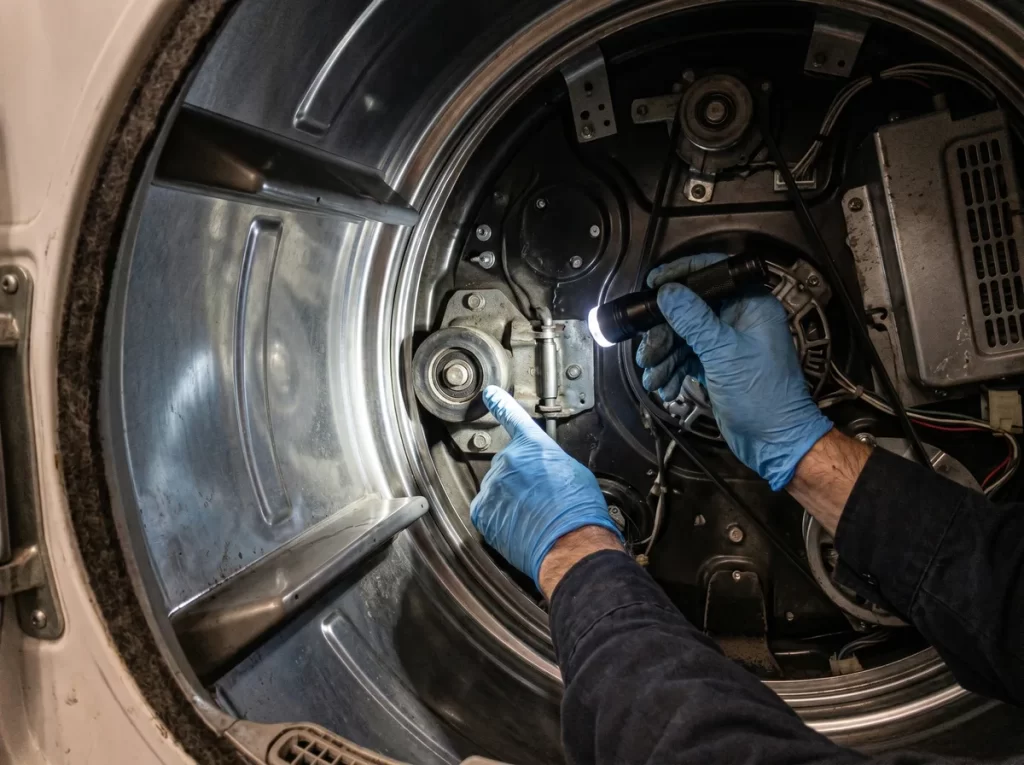
The drive belt is the flat rubber belt that wraps around the drum, over the motor pulley, and through the idler pulley. When the belt gets old, the rubber glazes over and starts slipping slightly on the smooth metal surfaces, creating a high-pitched squeaking or squealing sound. You’ll often hear this squeak during the first 30 seconds of a cycle when the drum is accelerating from rest.
A slipping belt also generates heat from friction. If you notice the squeak coincides with a faint burning smell (not a lint smell, but a rubber smell), the belt is slipping against metal. This is worth addressing promptly. A snapped belt means the drum stops spinning while the heating element stays on, which can cause overheating and, in worst cases, a fire if there’s any lint accumulation in the cabinet.
???? Red flag
A dryer that squeaks AND smells like burning rubber is not just a maintenance issue. A slipping drive belt generates heat from friction and can overheat the motor if it fails completely. The U.S. Fire Administration reports dryers cause roughly 16,000 home structure fires annually. A worn belt combined with a lint-clogged cabinet is exactly the combination that leads to dryer fires.
Front drum glides and drum seal
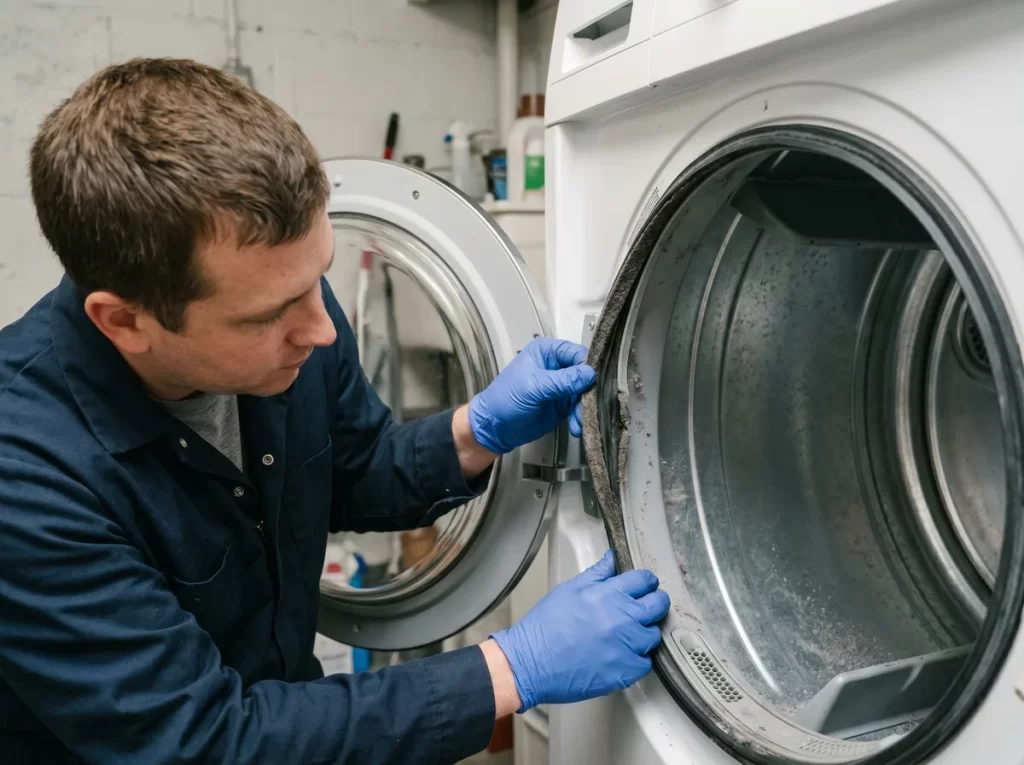
The front of the LG drum rides on plastic glides (also called drum slides or drum pads), and the drum edge is sealed with a felt or rubber drum seal. When the glides wear down, the metal drum edge starts making direct contact with the metal front bulkhead, producing a scraping or squeaking sound. When the felt drum seal frays, it can create an intermittent squeaking that’s hard to localize.
The drum glides and seal are usually replaced together with the rollers as a set, since accessing them requires the same level of disassembly. Replacing all three at once adds a small amount to the parts cost but saves a second service call 6 months down the road.
Motor bearing: the expensive one
A motor bearing failure sounds different from roller wear. Worn rollers produce a rhythmic squeak that matches the drum rotation speed. A failing motor bearing produces a constant high-pitched squeal or whine that doesn’t follow the drum’s rotation rhythm, and is often louder when the dryer has been running for 10 to 15 minutes and the motor reaches operating temperature.
Motor bearing repair requires replacing the motor assembly on most LG dryers. The motor is the most expensive component in the dryer, and the labor to access it is significant. On a dryer under 6 years old with no other issues, a motor replacement is usually worth the cost. On a 10-year-old dryer, the 50% rule applies: compare the repair quote to what a comparable new LG model would cost.
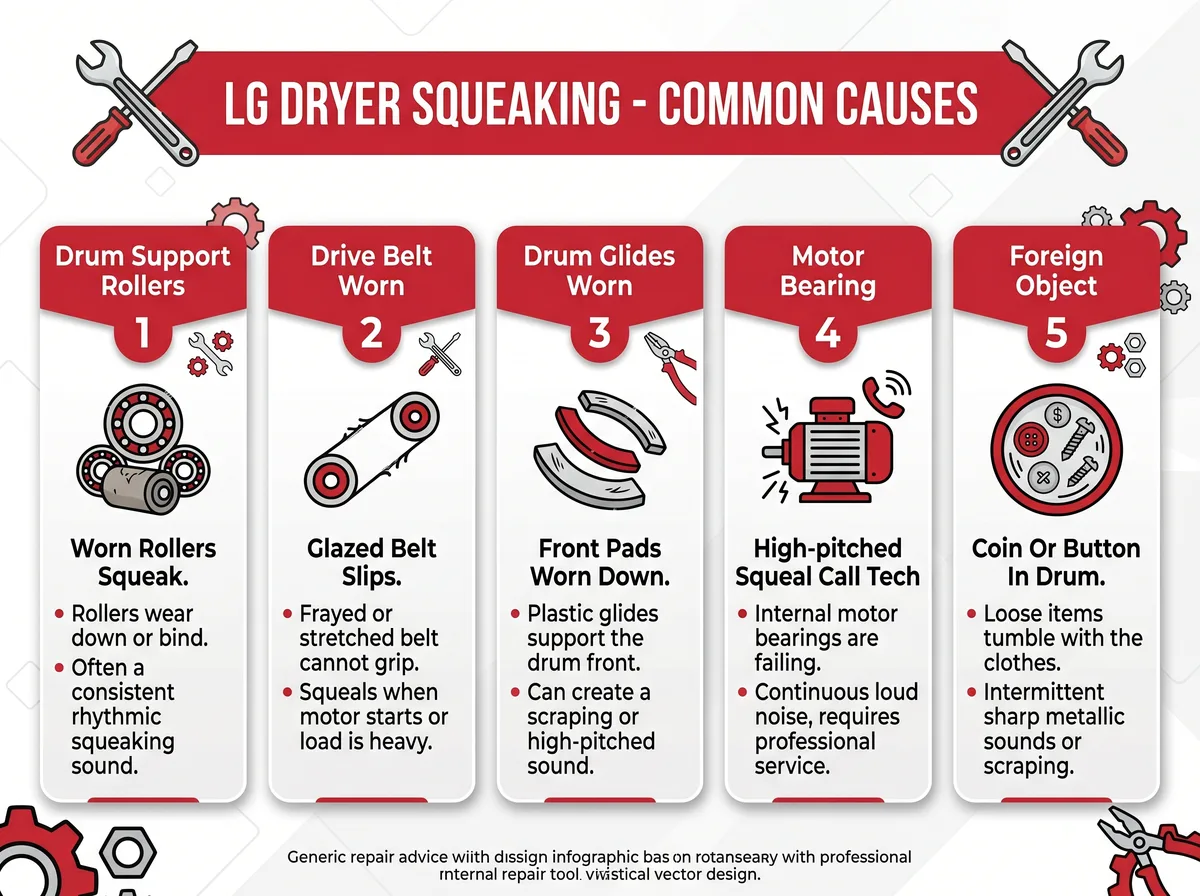
Foreign objects in the drum
A single coin, button, or underwire from a bra caught between the drum and the bulkhead can produce a rhythmic tapping or scraping sound that sounds similar to roller wear. Before pulling the dryer apart, try this: run the dryer empty for 5 minutes while it’s cool and quiet. If the sound disappears with an empty drum, something is trapped in your clothing, not the machine. If the sound persists with an empty drum, it’s a mechanical component.
???? Save your money
Replacing drum rollers, the drive belt, and drum glides all at once when disassembling the dryer typically adds just $10 to $15 to the parts cost but saves a second service call in 12 months when the next component reaches its wear point. Ask your technician to do the full roller and belt kit at the same visit.
LG dryer repair in Miami and South Florida
If I had a squeaking LG dryer, I’d run it empty and listen carefully first, then pull the drum rollers and belt if the squeak persists. On an LG under 8 years old, that repair is almost always worth doing. On a 12-year-old unit with a motor bearing on the way out, I’d have an honest conversation with a technician about whether the appliance is worth the repair cost. Max Appliance Repair Miami services LG dryers across Miami Beach, Sunrise, and all of South Florida. Call with the dryer model number and a description of when the squeak happens, and we can usually give you a rough estimate before the technician arrives.
Disclaimer
This article is for general guidance only. Costs, products, regulations, and best practices change. Always confirm with a licensed professional for your specific situation, especially for any work involving gas appliances.