
LG Dryer D80 Code Explained (and How to Clear It)
D80 on an LG dryer is not a fault code. It is a duct blockage warning telling you the exhaust vent is roughly 80 percent restricted. LG dryers run a flow sensor that measures how freely air leaves the machine. D80, D90 and D95 indicate progressively worse blockage. Clearing the vent removes the message. Ignoring it leads to long drying times, overheating, and eventually a blown thermal fuse.
What the D codes mean
- D80 roughly 80 percent of the duct is blocked
- D90 roughly 90 percent blocked
- D95 roughly 95 percent blocked, close to fully restricted
These are advisory messages. The dryer keeps running, which is exactly why people ignore them for months. Meanwhile drying times creep up, the machine runs hotter than designed, and the components that protect it start to fail.
What causes it
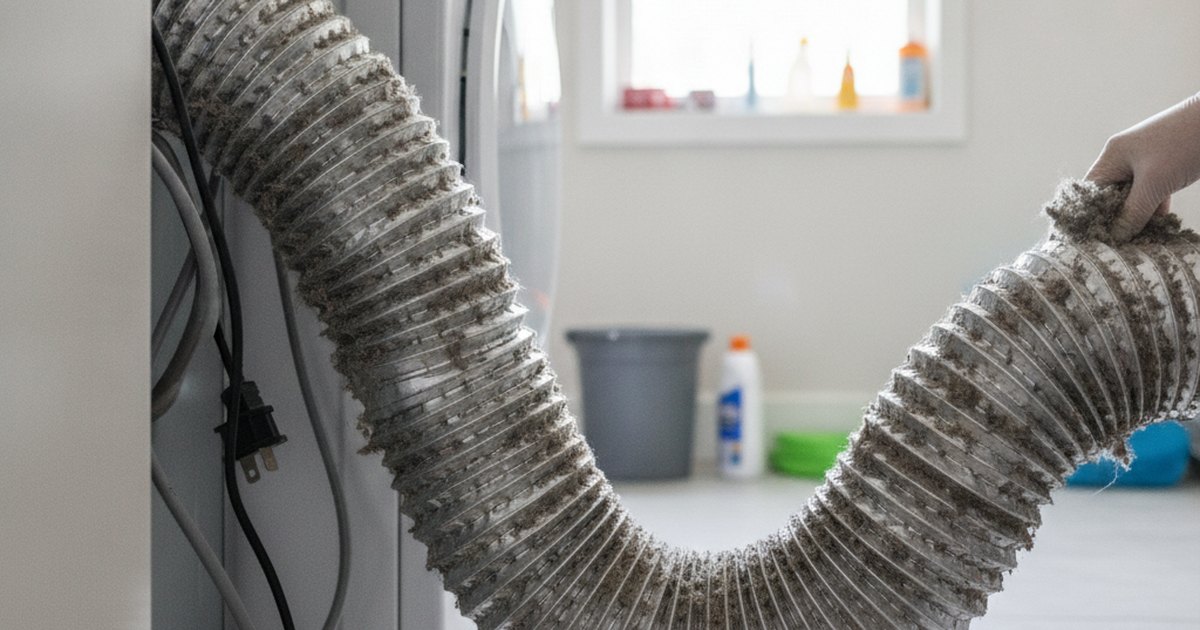
- Lint accumulation in the duct, the usual cause, building gradually over months or years
- A crushed or kinked flexible duct behind the dryer, common when the machine is pushed back tight against a wall
- An excessively long vent run, or one with too many bends, which is typical in condo and townhouse laundry closets
- A blocked exterior vent hood, including flaps painted shut, bird or insect nests, or screening that should not be there
- A clogged lint filter or a filter coated in fabric softener residue
How to clear D80 safely
- Turn the dryer off and unplug it, or switch off the gas supply on a gas model.
- Clean the lint filter, then wash it in warm soapy water and dry it fully. A residue film restricts airflow without looking dirty.
- Pull the dryer out and disconnect the flexible duct from the back.
- Clear the duct end to end with a vent brush kit. Vacuum out what you loosen.
- Go outside and check the exterior hood. Make sure the flap opens freely and there is no lint, nest or debris behind it.
- Reconnect the duct, making sure it is not kinked or crushed when you push the dryer back. Leave a few inches of clearance.
- Run a timed dry cycle. The message should clear once the sensor reads normal flow.
If D80 returns immediately after a thorough cleaning, the restriction is either deeper inside the wall duct or the flow sensor itself is misreading. Both need a technician.
Why this matters more than it looks
A restricted vent is the leading cause of dryer fires, and it is also what blows thermal fuses and burns out heating elements. Every no-heat repair caused by a blown fuse traces back to airflow. Clearing a D80 promptly is one of the cheapest pieces of appliance maintenance there is, and it protects the parts that are expensive to replace.
Why Miami dryers hit D80 sooner
Humid air makes lint heavier and stickier so it settles inside the duct rather than blowing out. Condo laundry closets frequently have long, shared, or multi-bend vent runs. Between those two factors, LG dryers in South Florida tend to show D80 noticeably sooner than the same machine would in a drier climate.
Frequently asked questions
Can I keep using the dryer with D80 showing?
It will keep running, but you should not leave it. Drying takes longer, the machine runs hotter than designed, and you are heading toward a blown thermal fuse or worse. Treat it as a job for this week.
How do I get rid of the D80 message?
Clear the vent. The message is generated by a live airflow reading, so it disappears on its own once air moves freely again. There is no reset code that legitimately clears it.
How often should a dryer vent be cleaned in Miami?
At least once a year for most homes, and more often for long condo vent runs or households doing heavy laundry.
Is D80 covered by warranty?
Generally no. It indicates a maintenance issue with the home duct rather than a manufacturing defect in the dryer.
Need the vent cleared or the sensor checked?
If D80 keeps returning after cleaning, we can trace the restriction through the wall duct and test the flow sensor. See dryer repair in Miami or LG appliance repair, and call (786) 733-9343 for same-day service.
The U.S. Consumer Product Safety Commission publishes guidance on dryer vent fire prevention.