
Condo vs House: How Your Appliances Age Differently Depending on Where You Live
South Florida has one of the highest concentrations of condo living in the United States. Miami-Dade and Broward County together have tens of thousands of condo units, and the proportion of residents who live in multi-story buildings rather than single-family homes is significantly above the national average. What most people do not realise is that where you live- condo or house has a meaningful effect on how your appliances perform, what problems they are more likely to develop, and how long they last. The reasons are practical and specific.
The Four Key Differences
The differences are not about the brand of appliance or even the quality. They are about the physical environment the appliance lives in: ventilation, water pressure, building infrastructure, and space constraints. Each of these affects different appliances in different ways.
Dryers: The Biggest Difference of All
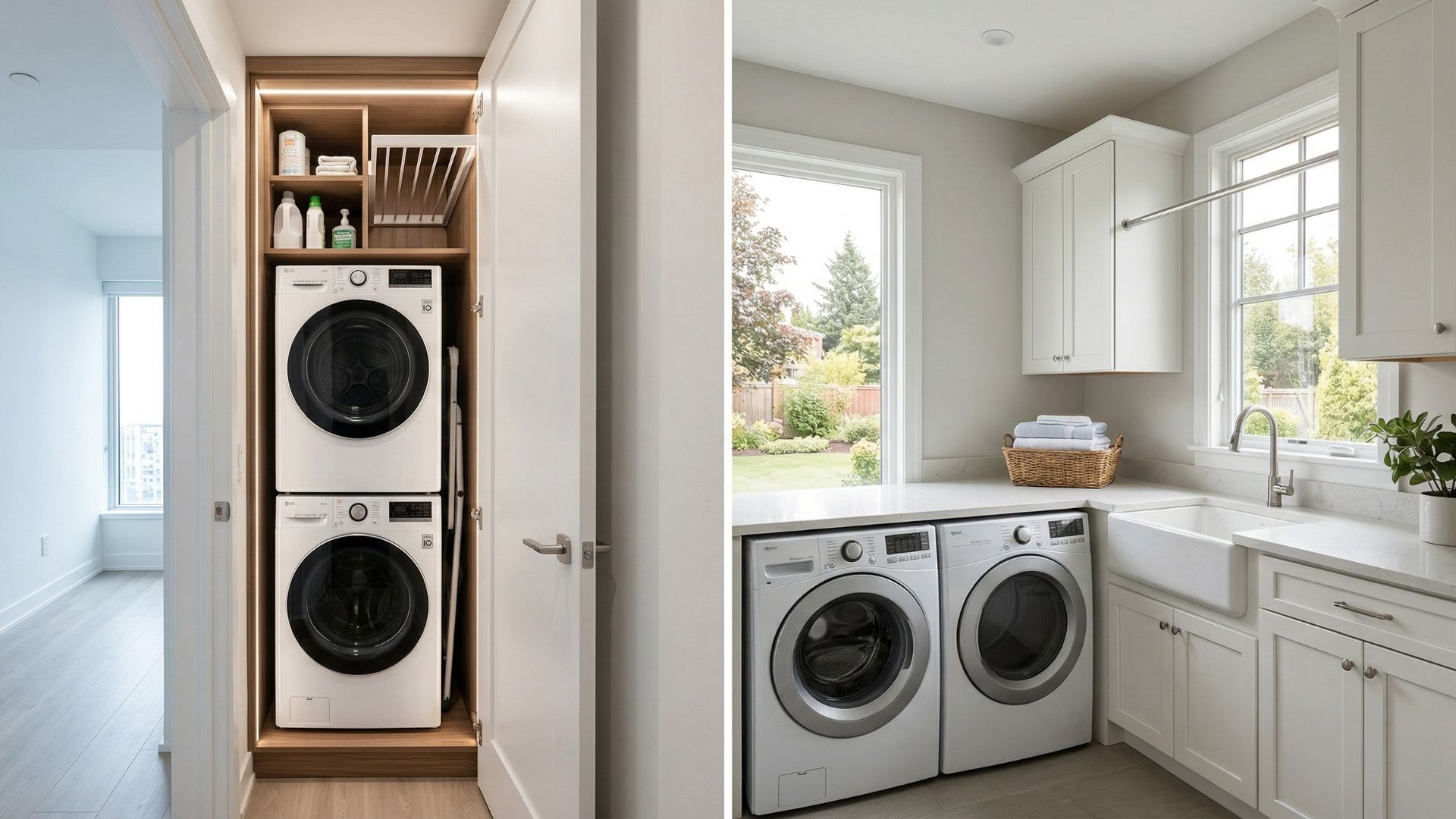
The dryer is where the condo-versus-house gap shows up most dramatically. A house typically has a short, direct dryer vent path from the laundry room to an exterior wall often 6 to 10 feet with one or two gentle bends. A condo on the 12th floor has a vent that may travel 30 or more feet through the building’s vent shaft to reach an exterior termination, with multiple direction changes along the way.
Every additional foot of vent and every additional bend increases the resistance the dryer has to work against to exhaust moisture. A dryer designed to push exhaust through 10 feet of duct is running significantly harder when it has to push through 35 feet. The practical consequences are longer drying times, higher electricity consumption, more frequent thermal fuse failures from overheating, and lint accumulation in the vent that happens much faster than the standard annual cleaning schedule assumes.
In South Florida’s humidity, this effect is amplified further because the moisture the dryer is trying to exhaust is competing against high ambient humidity in the vent shaft. Condo dryers in this region genuinely need professional vent cleaning every three to four months in households that do laundry regularly, not once a year. The U.S. Fire Administration identifies failure to clean dryer vents as the leading cause of dryer fires, and the risk is proportionally higher when vent runs are long and cleaning is infrequent.
House owners are not immune to vent problems, but the shorter runs and simpler paths mean the risk accumulates more slowly. If your dryer is taking longer than it used to and you live in a condo, the vent is almost certainly the first thing to check.
Refrigerators: Temperature and Ventilation
Refrigerators need adequate clearance around their condenser coils to shed heat efficiently. In a house, the kitchen is typically large enough that a fridge can be positioned with reasonable clearance on all sides and a clear path for air circulation around the back and bottom.
Condo kitchens, particularly in older buildings, are often tighter. Refrigerators are squeezed into cabinetry enclosures with minimal clearance, the condenser coils are surrounded by cabinetry on three sides, and the air around them has nowhere to circulate. This forces the compressor to work against heat it cannot shed efficiently, which increases electricity consumption and accelerates compressor wear.
The solution is not always practical since you cannot always move a condo kitchen around, but cleaning the condenser coils every four to five months rather than every six in a condo with tight clearances makes a real difference. A fridge that runs constantly in a condo is more often a ventilation issue than a mechanical one.
Washing Machines: Water Pressure and Building Plumbing
Water pressure in multi-story buildings varies in ways that do not affect single-family homes. Ground floor units often experience higher pressure than upper floor units. Buildings with aging infrastructure can have pressure fluctuations throughout the day as other units use water simultaneously. Washing machines are designed for a specific water pressure range, typically 20 to 116 PSI. Pressure consistently outside this range affects fill times, cycle performance, and over the long term, the inlet valve.
High pressure (common on lower condo floors and in some house setups) stresses the inlet valve solenoid and can cause the machine to overfill. Low pressure (common on upper floors) leads to extended fill times that the machine’s control board may interpret as a fault, triggering an error code. Neither is a problem that shows up immediately, but both contribute to valve wear that shows up after several years of use.
House owners on municipal water have more consistent pressure but are not immune. A pressure regulator on the incoming water line is a relatively inexpensive addition that protects all water-connected appliances from pressure spikes regardless of whether you are in a condo or a house.
Dishwashers: Hard Water Affects Both, But Condo Pipes Add a Variable
The hard water challenge from Miami-Dade and Broward County’s mineral content affects dishwashers equally in condos and houses. Monthly filter cleaning and six-to-eight-week descaling cycles are the right intervals for both. What differs in condos is the building’s shared plumbing infrastructure.
Older condo buildings with galvanised steel plumbing can introduce rust particles and debris into the water supply that do not come from the municipal source itself. This debris accumulates in dishwasher filters faster, can damage spray arm nozzles, and in some cases causes discolouration on dishes that homeowners misattribute to a faulty dishwasher. If your dishwasher is leaving residue or discolouration on dishes despite regular descaling, the incoming water quality from the building’s pipes is worth investigating before assuming the machine itself is at fault.
Appliance Size and Condo Constraints
Many condos, particularly in South Florida’s older building stock, were built with compact appliance spaces. The standard opening dimensions for a dishwasher, washer-dryer unit, or refrigerator in a 1980s condo kitchen may not accommodate a current-generation full-size appliance without modification. This matters when an appliance reaches end of life and needs to be replaced.
It also means that condo-dwellers sometimes end up with compact or slimline appliances that have smaller drums, smaller capacities, and in some categories less powerful motors than the full-size equivalents. A compact front-load washer in a condo is not the same machine as a full-size front-loader in a house. It runs more cycles per week to handle the same laundry volume, which accelerates wear proportionally.
Where House Owners Have Their Own Challenges
Houses are not automatically easier on appliances in every respect. Single-family homes in South Florida often have larger laundry loads, more people using appliances, and in older neighbourhoods, less predictable electrical infrastructure. Voltage fluctuations from the local grid are more common in some residential areas than in modern high-rise buildings with dedicated electrical systems.
Houses near the coast also deal with salt air, which corrodes exposed metal components faster than it would further inland. A washing machine or dryer with its exhaust or venting exposed to coastal air will show faster corrosion on external metal parts. This is more common in houses near the ocean than in interior condos at altitude, where the salt air concentration at the building exterior is often less direct.
| Factor | Condo | House |
|---|---|---|
| Dryer vent length | Often long and complex. Clean every 3 to 4 months | Usually shorter. Clean every 6 months |
| Fridge ventilation | Often restricted by cabinetry. Clean coils every 4 months | Usually better clearance. Clean coils every 6 months |
| Water pressure consistency | Variable by floor and building age | Usually more consistent on municipal supply |
| Plumbing debris risk | Higher in older buildings with galvanised pipes | Lower in homes with modern plumbing |
| Salt air exposure | Often less direct (higher altitude, sealed building) | More direct, particularly near the coastline |
| Appliance size flexibility | Often constrained by older building dimensions | Usually more flexible |
A note on condo rules: Some condo associations in South Florida restrict what repairs can be done and by whom, particularly for shared infrastructure like vent shafts and water lines. Before booking any repair that involves the vent system or building plumbing, check your condo association rules. Your HOA may have preferred vendors or require written approval for certain types of work. This does not affect repairs to the appliance itself, which is your property, but it can affect vent cleaning and any work that touches shared building systems.
Condo or House, We Service All of South Florida
Our technicians are familiar with the specific challenges of both condo and single-family home appliance repairs across Miami-Dade, Broward, and Palm Beach County. Same-day availability in most areas.
The appliances are the same machines. The environment they operate in is not. Condo dwellers and house owners in South Florida face different versions of the same climate challenge, and the maintenance adjustments that make sense for one do not always map directly onto the other. Knowing which category your home falls into is the starting point for building a maintenance routine that actually matches your situation.
Need a hand with this? Our technicians cover Miami-Dade, Broward and Palm Beach with same-day service and a free service call when you book the repair. See appliance repair in Miami, our service area, or call (786) 733-9343.